Choosing the 2026 best Insulated Low-E Glass requires more than comparing catalog prices. Global buyers need measurable thermal performance, stable manufacturing, and dependable technical support.
A strong unit combines a low-emissivity coating, sealed insulating cavities, and carefully selected spacers. Argon filling can improve insulation, but only when the edge seal remains reliable. U-value matters in cold climates. Solar heat gain matters in warmer regions. Visible light transmission also affects indoor comfort and lighting costs. These values should come from accredited laboratory testing, not vague marketing claims.
Real projects reveal small details. A warehouse facing intense sunlight may need lower solar gain. A northern residential project may prioritize heat retention. Glass thickness, cavity width, frame compatibility, and installation quality can change the final result. Poor handling can damage an excellent product. It happens.
Experienced buyers should request test reports, coating specifications, sealant information, and production quality records. They should also confirm whether the supplier understands applicable regional standards and documentation requirements. Certifications can support trust, but certificates alone do not guarantee long-term performance. Independent verification remains valuable.
The best choice is rarely the most expensive option. It is the product that matches climate, building use, energy targets, and installation conditions. Some comparisons remain imperfect because suppliers use different testing methods. That limitation deserves attention. A careful buyer should question unusually impressive numbers and request comparable evidence before signing a contract. Reliable performance begins with transparent data, practical engineering, and realistic expectations.
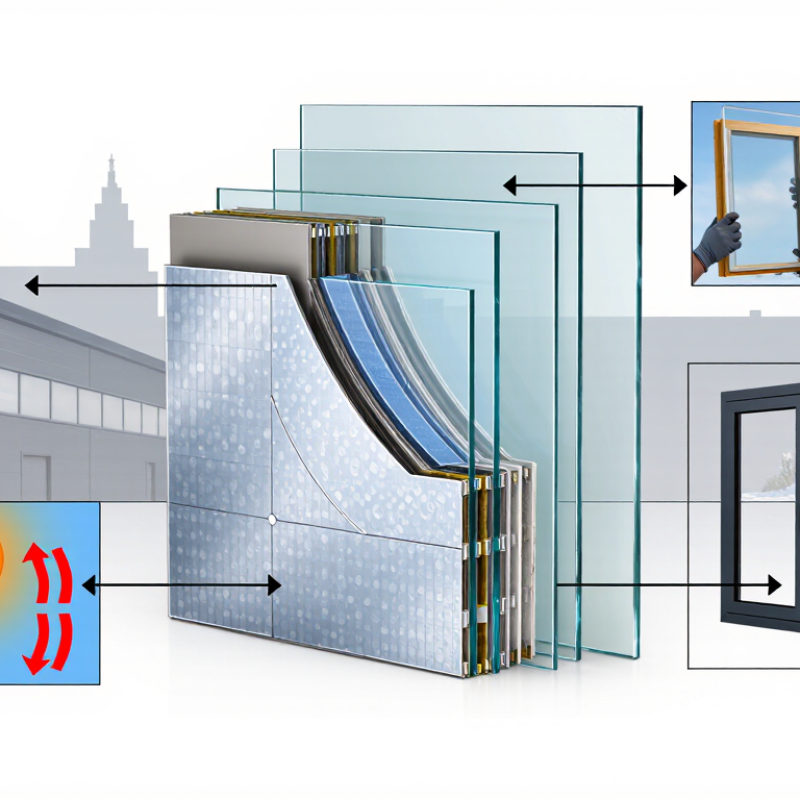
What Insulated Low-E Glass Is and How It Works
2026 Best Insulated Low E Glass for Global Buyers?
What Insulated Low-E Glass Is and How It Works
Insulated Low-E glass combines two or more panes with a sealed airspace. A spacer keeps the panes apart and supports the edge seal. The Low-E coating is a thin, nearly invisible layer on one glass surface. It reflects much of the building’s infrared heat while allowing useful daylight through. In winter, indoor warmth stays inside. In hot climates, exterior solar heat is reduced before reaching the room.
The cavity may contain dry air or an insulating gas, such as argon. Gas filling can improve thermal performance, but only when the seal remains stable. A warm-edge spacer can also reduce heat loss around the perimeter. That detail matters near cold window edges, where condensation often appears first. The glass itself is only part of the system. Frame design, installation quality, window orientation, and shading can change real results.
Reliable evaluation should compare U-value, solar heat gain coefficient, visible transmittance, and condensation resistance. Lower U-value usually means better insulation, but it does not automatically suit every climate. A highly reflective coating may reduce glare while limiting daylight more than expected. The label alone can mislead. Buyers should request independent test reports, coating position, gas specifications, and seal durability data. Even careful specifications leave room for error. A small edge defect or poor installation can weaken excellent glass performance.
2026 Best Insulated Low-E Glass for Global Buyers
What insulated Low-E glass is and how it works: a sealed cavity, low-emissivity coating and optional inert gas reduce heat transfer through conduction, convection and radiation.
Representative center-of-glass thermal transmittance values for common insulating glass configurations. Lower Ug values indicate better insulation. Actual whole-window performance depends on the frame, spacer, glass thickness, cavity width, coating position and installation.
Key Performance Factors for Global Glass Buyers
2026 Best Insulated Low-E Glass for Global Buyers?
Global glass buyers should compare more than coating labels. The U-factor measures heat transfer, while SHGC shows how much solar heat enters a building. Visible transmittance affects daylight and glare. These values must match the project’s climate, orientation, and HVAC design. According to the U.S. Department of Energy, windows can influence 25–30% of residential heating and cooling energy use. That makes glass selection a design decision, not only a purchasing decision.
Performance depends on the complete insulating glass unit. Argon filling, warm-edge spacers, seal durability, cavity width, and frame compatibility can change real results. The UNEP Global Status Report for Buildings and Construction 2024 reports that buildings consumed about 32% of global energy in 2022. Buyers should therefore request tested U-values, SHGC, visible transmittance, condensation resistance, and air-leakage data. Standards such as EN 1279, ASTM C1376, and ISO 20492 can support more reliable comparisons, but local certification remains essential.
Do not chase the lowest U-value blindly. A heavily coated pane may reduce daylight or create uncomfortable indoor colors. In hot climates, lower SHGC often matters more than maximum insulation. In cold regions, solar gain can support winter comfort. I have seen specifications fail because the glass performed well in the laboratory but poorly with the selected spacer and frame. That weakness deserves attention. Long-term warranty terms, edge-seal testing, and installation quality may matter as much as the coating itself.
Comparing Low-E Coatings, Gas Fills, and Spacer Systems
For 2026 projects, insulated low-E glass should match the building’s climate, orientation, and ventilation plan. Low-E coatings reduce heat transfer through microscopic metallic layers. A soft-coat system usually delivers stronger thermal performance, but it needs careful handling during fabrication. Hard-coat glass tolerates tougher processing and may suit exposed applications. I have seen buyers select the lowest U-value, then face unwanted solar heat indoors.
Gas fill matters too. Argon is widely used and offers a practical balance between cost and insulation. Krypton can perform better in narrow cavities, especially where frame depth is limited. However, gas performance depends on cavity width, seal quality, and manufacturing control. A small leak can quietly reduce expected benefits. Ask for tested center-of-glass values, not only brochure estimates.
Spacer systems deserve equal attention. Aluminum spacers remain familiar, yet they conduct heat quickly at the glass edge. Warm-edge spacers reduce thermal bridging and can lower condensation risk around the perimeter. This detail becomes visible on cold mornings, when droplets appear beside the frame. It also affects comfort near large windows. In coastal or humid regions, buyers should check desiccant performance and seal durability. Specifications can look impressive. Installation errors still matter. Review local test reports, edge temperatures, and warranty conditions before approving a final configuration.
2026 Best Insulated Low E Glass for Global Buyers? - Comparing Low-E Coatings, Gas Fills, and Spacer Systems
| Insulated Glass Configuration |
Low-E Coating Type |
Typical Gas Fill |
Recommended Spacer |
Typical Ug
(W/m²·K) |
Approx. Solar Factor
(g-value) |
Approx. Visible
Light Transmittance |
Best-Fit Application |
| Double glazing, 4–16–4 mm |
Pyrolytic hard-coat Low-E |
Air or approximately 90% argon |
Stainless-steel or warm-edge spacer |
1.4–1.8 |
0.55–0.70 |
0.65–0.80 |
Moderate climates, renovation projects, and applications requiring high coating durability |
| Double glazing, 4–16–4 mm |
Single-silver sputtered soft-coat Low-E |
Approximately 90% argon |
Warm-edge stainless-steel or hybrid spacer |
1.0–1.3 |
0.45–0.65 |
0.55–0.75 |
General residential and commercial buildings seeking a balanced energy-performance level |
| Double glazing, 4–16–4 mm |
Selective single-silver Low-E |
Approximately 90% argon |
Warm-edge spacer |
1.0–1.2 |
0.30–0.50 |
0.45–0.70 |
Hot climates and façades where solar-heat control is more important than maximum daylight |
| Triple glazing, 4–12–4–12–4 mm |
Double-silver solar-control Low-E |
Approximately 90% argon in both cavities |
Warm-edge stainless-steel or hybrid spacer |
0.5–0.8 |
0.30–0.50 |
0.50–0.70 |
Cold climates, energy-efficient housing, and buildings with stringent heating-load targets |
| Triple glazing, 4–12–4–12–4 mm |
Triple-silver high-selectivity Low-E |
Argon or krypton, approximately 90% fill |
Low-conductivity warm-edge spacer |
0.4–0.7 |
0.25–0.45 |
0.45–0.68 |
Cold or mixed climates requiring low heat transfer and controlled solar gain |
| Triple glazing, wider cavities |
Double- or triple-silver Low-E, selected for climate |
Krypton, approximately 90% fill |
Low-conductivity warm-edge spacer |
0.35–0.60 |
0.25–0.45 |
0.40–0.65 |
Premium low-energy buildings where frame depth and gas cost can accommodate the specification |
Spacer System Comparison
| Spacer System |
Approx. Material Thermal Conductivity
(W/m·K) |
Thermal Performance |
Moisture and Durability Considerations |
Typical Suitability |
| Aluminum spacer |
Approximately 160–220 |
Highest edge heat transfer and greater risk of interior-edge condensation |
Strong and economical; performance depends heavily on thermal breaks and seal quality |
Budget-oriented projects and mild climates |
| Stainless-steel spacer |
Approximately 14–20 |
Lower heat transfer than aluminum with good structural stability |
Good resistance to corrosion and mechanical deformation when properly fabricated |
General residential and commercial use |
| Hybrid or composite warm-edge spacer |
Approximately 0.2–1.0 effective range |
Very good edge insulation and reduced thermal bridging |
Requires controlled production, compatible sealants, and correct corner workmanship |
High-performance residential and commercial façades |
| Flexible foam-based warm-edge spacer |
Approximately 0.15–0.40 effective range |
Excellent reduction of edge heat loss when correctly installed |
Sealant compatibility, compression control, and long-term gas retention are critical |
Low-energy and passive-building-oriented projects |
Technical Notes:
Ug values are indicative center-of-glass ranges for sealed insulating glass units and are not whole-window U-values. Actual performance varies with glass thickness, cavity width, coating emissivity, gas concentration, altitude, unit size, frame material, spacer geometry, edge seal design, and test standard. Solar factor and visible transmittance vary by glass substrate, coating design, and angle of incidence. A nominal gas fill of approximately 90% requires appropriate manufacturing controls and periodic quality verification.
Regional Standards, Climate Needs, and Building Applications
2026 Best Insulated Low E Glass for Global Buyers?
Regional Standards, Climate Needs, and Building Applications
Choosing insulated Low E glass in 2026 requires more than comparing U-values. Regional standards define performance, safety, and testing requirements. European projects may reference EN 1279, while North American work often follows ASTM and local building codes. Always request current test reports, coating details, spacer specifications, and factory quality records. A low U-value alone does not guarantee comfort.
Climate changes the specification. In hot regions, a lower solar heat gain coefficient can reduce cooling loads near west-facing windows. In cold climates, stronger insulation helps retain indoor warmth beside large glazed walls. Humid coastal areas need durable edge seals and careful condensation analysis. High-altitude projects may require pressure considerations inside the insulating unit. Small details matter.
Building use matters too. Offices often need balanced daylight and glare control. Hospitals may prioritize thermal stability and visual comfort. Homes benefit from warm-edge spacers, acoustic options, and safe glass configurations. For façades, check wind loads, thermal stress, and maintenance access before selecting the coating.
Tips: Compare U-value, SHGC, visible transmittance, and acoustic data together. Match the glass to orientation, frame design, and local code. Ask for samples under real lighting. Dark coatings can look different than expected. I have seen specifications fail because the frame was ignored. That mistake is easy to repeat. Allow room for review.
How to Select, Specify, and Source the Best Option in 2026
2026 Best Insulated Low E Glass for Global Buyers?
How to Select, Specify, and Source the Best Option in 2026
Selecting insulated low E glass starts with the building’s climate, orientation, and window frame. A low Ug value alone can mislead. In cold regions, prioritize thermal insulation and airtight edge seals. In hot climates, check solar heat gain control and visible light transmission. South-facing façades may need different glass from shaded elevations. Small details matter.
Specify the complete unit, not only the coating. State the glass thickness, cavity width, gas fill, spacer type, coating position, and target performance. Request Ug, solar factor, visible transmittance, and acoustic data from an accredited laboratory. Confirm tolerances and long-term seal durability.
I once focused too heavily on center-glass performance. The frame and spacer later weakened the actual result.
Global sourcing requires careful verification. Compare technical drawings, sample units, production records, and packaging methods. Ask whether the supplier can provide batch traceability and consistent inspection reports. Check shipping dimensions before production. A damaged corner can ruin an otherwise excellent unit. Confirm regional standards with the project’s consultant, because compliance requirements vary between markets. Do not accept vague claims such as “premium insulation.” Use measurable values, written specifications, and independent evidence. Even experienced buyers should revisit their assumptions in 2026. Prices, coatings, and energy targets continue to change.
FAQS
It uses two or more panes separated by a sealed airspace. A thin coating reflects infrared heat while allowing daylight through. The glass works as a system.
In winter, it helps keep indoor warmth inside. In hot climates, it reduces solar heat entering the room. Cold edges can still cause discomfort.
The cavity may contain dry air or an insulating gas. Argon offers a practical balance between cost and insulation. Narrow cavities may benefit from krypton. Small leaks matter.
A spacer keeps the panes apart and supports the edge seal. Warm-edge spacers reduce heat loss near the perimeter. Edges get cold. They may also reduce condensation.
No. A low U-value usually indicates better insulation, but climate and orientation also matter. Excessive reflection may reduce daylight or create unwanted indoor heat.
Compare U-value, solar heat gain, visible transmittance, and condensation resistance. Request center-of-glass test results from an accredited laboratory. Brochure estimates alone can mislead.
State glass thickness, cavity width, gas fill, spacer type, and coating position. Include target thermal, solar, visible-light, and acoustic values. Confirm seal durability and tolerances.
Review drawings, samples, production records, packaging, and batch traceability. Check shipping dimensions before production. One damaged corner can ruin an excellent unit. I might overvalue technical data sometimes; installation still decides much.
Conclusion
Insulated Low-E Glass combines multiple glass panes, a low-emissivity coating, sealed airspaces, and carefully selected spacer systems to improve thermal efficiency while maintaining daylight and clear views. Its coating helps reduce radiant heat transfer, while air or inert gas fills can further limit heat movement. For global buyers, key performance factors include U-value, solar heat gain coefficient, visible light transmission, condensation resistance, acoustic performance, durability, and overall life-cycle cost.
Choosing the best Insulated Low-E Glass in 2026 requires matching the coating type, gas fill, spacer design, and glass configuration to regional climate conditions, building codes, and project goals. Cold climates may prioritize heat retention, while hot or mixed climates often require stronger solar control. Buyers should also consider façade orientation, building use, safety requirements, local standards, manufacturing quality, logistics, installation conditions, and long-term warranty support. A clear specification and reliable sourcing process can help ensure consistent performance across residential, commercial, and high-performance architectural applications.

 Guoxin Glass