China Best Radiation Protection X Ray Glass Suppliers?

Time:2026-10-20 Author:Aria
0%

Choosing the best China supplier for Radiation Protection X-Ray Glass requires more than comparing prices. The right choice depends on protection performance, optical clarity, production control, and dependable delivery. In medical imaging rooms, a viewing window must protect staff while preserving a clear view of the patient and equipment. Even small defects, cloudy surfaces, or incorrect measurements can create costly installation problems.

In practice, experienced buyers review lead-equivalent specifications, glass thickness, visible-light transmission, edge quality, and frame compatibility. They also request technical data sheets, batch inspection records, and test reports from qualified laboratories. Supplier audits can reveal important details, including factory cleanliness, storage methods, and how glass is packed against moisture and impact. A reliable manufacturer should explain its testing process clearly. Vague claims deserve caution.

There is no universal “best” supplier for every project. A hospital renovation may need custom sizes, while a dental clinic may require faster delivery and simpler installation. Buyers should compare communication quality, drawing approval procedures, replacement policies, and export experience. Independent certification helps, but it does not replace careful verification. That point is easy to overlook.

This guide examines leading Chinese suppliers through practical purchasing criteria. It considers product quality, customization, technical support, documentation, and long-term reliability. Some suppliers may appear strong online but provide limited evidence. Others may have modest marketing and better production discipline. A balanced review should recognize both strengths and gaps before a final decision is made.
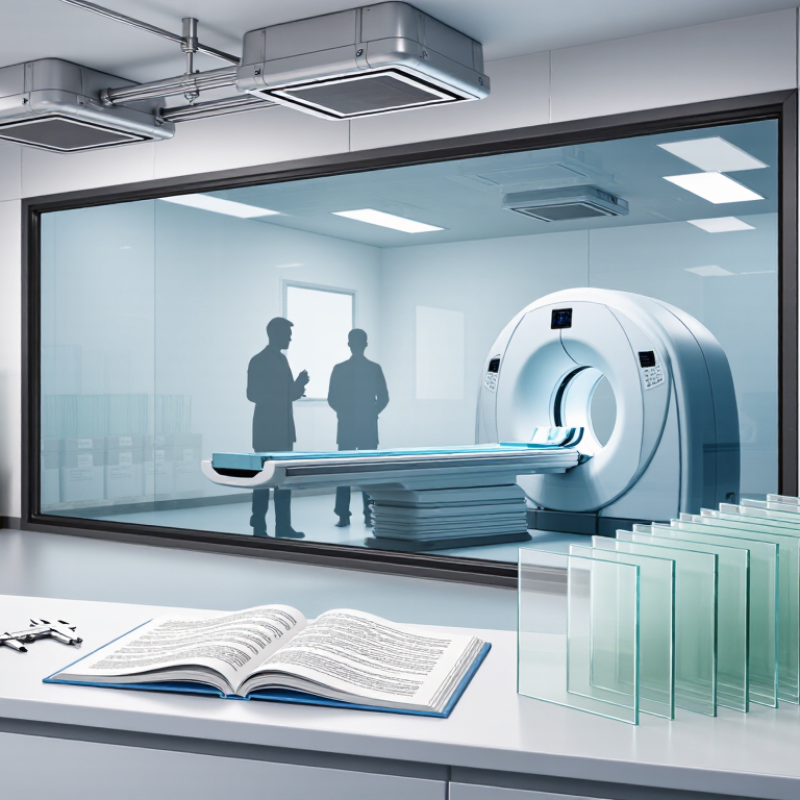
China Best Radiation Protection X Ray Glass Suppliers?

What Is Radiation Protection X-Ray Glass?

Radiation protection X-ray glass is a transparent shielding material designed to reduce scattered and primary X-ray exposure while preserving visual contact. It usually contains lead or other high-density elements within a glass matrix. The key measurement is lead equivalence, expressed in millimetres of lead, such as 0.5 mm Pb. This value is energy-dependent, not a universal guarantee.

The IAEA Safety Guide SSG-46 states that shielding design should consider workload, beam energy, distance, and room occupancy. Therefore, selecting glass by thickness alone is weak practice. IEC 61331-2 also addresses translucent protective plates used for diagnostic X-radiation. Testing should confirm attenuation, optical quality, dimensions, and installation tolerance. A clear viewing panel can still fail if its frame, joints, or wall interface creates gaps.

UNSCEAR’s 2020/2021 scientific assessment identifies medical exposure as the largest artificial source of population radiation exposure. That finding makes practical shielding decisions important in imaging rooms. Good X-ray glass should provide stable visibility, low distortion, and documented protection across the intended energy range. It should also resist discoloration and internal defects during regular clinical use. Yet specifications can look precise while hiding assumptions. A supplier’s certificate is useful, but independent verification remains wiser. Experienced installers should inspect alignment, sealing, and the final room layout, not only the glass panel.

How Is X-Ray Protective Glass Manufactured in China?

How Is X-Ray Protective Glass Manufactured in China?

X-ray protective glass begins with carefully measured silica, lead oxide, and stabilizing materials. These ingredients are mixed to support optical clarity and radiation attenuation. The batch enters a controlled furnace, often above 1,000°C. Temperature consistency matters. Small fluctuations can create bubbles, streaks, or uneven density.

After melting, the glass is cast or rolled into thick sheets. It is then slowly annealed to reduce internal stress. This stage can take many hours. Cutting and edge polishing follow, using water-cooled diamond tools. Each sheet should receive visual inspection, dimensional checks, and lead-equivalence testing. Reliable manufacturers also review light transmission, surface defects, and flatness. Independent laboratory reports add useful evidence, although paperwork alone cannot replace factory inspection. No process is flawless. Human handling can still cause scratches or hidden edge damage.

Tips: Ask for batch records, test methods, thickness tolerance, and recent inspection reports. Confirm whether testing covers the exact glass thickness you will purchase. Visit the production site when possible. Check the furnace area, annealing controls, storage protection, and packing methods. A clear supply contract should define radiation performance, optical quality, delivery inspection, and corrective action. Small details matter.

China Best Radiation Protection X Ray Glass Suppliers? - How Is X-Ray Protective Glass Manufactured in China?

Technical data table for evaluating radiation-protective X-ray glass manufacturing and supplier capabilities

Evaluation Dimension Typical Technical Data Manufacturing or Quality-Control Requirement Buyer Verification Point
Primary Material Specialized radiation-shielding glass containing high-density metal oxides, commonly including barium, lead, or other shielding additives Raw materials should be accurately batched, thoroughly mixed, and melted at a controlled temperature to achieve uniform shielding performance Request the material composition, safety documentation, and product technical datasheet
Common Lead-Equivalent Ratings 0.50 mm Pb, 1.00 mm Pb, 1.50 mm Pb, and 2.00 mm Pb are common specification levels for diagnostic X-ray applications Shielding performance must be tested at the stated tube voltage and beam conditions; lead equivalence is not determined by thickness alone Confirm the test voltage, radiation spectrum, measurement method, and acceptance tolerance
Typical Thickness Range Approximately 7 mm to 20 mm, depending on glass composition and required lead equivalence Thickness should be measured at multiple points because edge-to-center variation can affect optical quality and shielding consistency Specify nominal thickness, permitted tolerance, and measurement locations in the purchase specification
Glass Melting Batch materials are melted in a furnace at a temperature generally above 1,000°C; the exact temperature depends on the glass formulation Continuous temperature monitoring and sufficient homogenization help reduce bubbles, striae, inclusions, and composition variation Ask for process-control records or a description of furnace and homogenization controls
Forming and Annealing The molten glass is formed into plates and gradually cooled through an annealing process Controlled annealing reduces internal stress and lowers the risk of cracking during cutting, drilling, framing, or installation Request stress inspection information and confirm whether heat-treated or laminated construction is required
Optical Quality The viewing area should be clear and free from unacceptable bubbles, stones, cords, cracks, haze, and visible distortion Visual inspection, transmitted-light inspection, and dimensional checks should be performed before packing Define inspection distance, lighting conditions, defect limits, and whether optical distortion is acceptable
Cutting and Edge Processing Available processing may include straight cutting, edge grinding, polishing, corner treatment, drilling, and custom sizing Edges should be free from sharp chips and cracks; holes and notches should be positioned according to approved drawings Approve shop drawings showing length, width, thickness, tolerances, holes, corners, and edge finish
Laminated Construction Multiple glass layers may be laminated with a polymer interlayer when safety, retention, or acoustic performance is required Lamination requires controlled cleanliness, temperature, pressure, and moisture conditions to limit delamination and bubbles Confirm interlayer type, total construction thickness, edge protection, and applicable safety-glazing requirements
Radiation-Test Documentation A professional test report should identify lead equivalence, test geometry, tube voltage, filtration, dose conditions, sample thickness, and results Testing should be traceable to a recognized laboratory or documented internal quality system, depending on project requirements Check that the report applies to the exact product construction and not only to a similar glass type
Applicable Reference Frameworks Project specifications may reference IEC 61331-2, relevant national requirements, and healthcare radiation-protection guidance such as China’s GBZ 130 The applicable standard depends on the destination market, room type, X-ray equipment, workload, distance, and shielding design Have the final shielding design reviewed by a qualified radiation-protection professional
Dimensional Tolerance Tolerance is project-specific and commonly covers length, width, thickness, squareness, hole position, and flatness Inspection tools should be calibrated and measurements should be recorded against approved drawings Do not accept unspecified tolerances; include numerical limits in the contract or technical agreement
Packaging and Export Protection Protective packaging generally includes separators, moisture-resistant materials, reinforced crates, corner protection, and tilt or impact indicators when needed Glass should be secured against movement, edge impact, condensation, and excessive stacking loads during transport Approve the packing method and require photographs before shipment for large or high-value orders
Supplier Selection Criteria Key factors include verified shielding data, manufacturing capacity, optical quality, processing capability, inspection records, export experience, and technical support A reliable supplier should provide consistent batch traceability, pre-production drawings, samples, quality records, and corrective-action support Compare suppliers using the same specification, test conditions, sample size, warranty terms, and delivery requirements
Important: Lead-equivalent requirements must be determined by a qualified radiation-protection professional. The values shown are typical industry reference ranges and should be confirmed against the project’s equipment, workload, local regulations, and final shielding calculation.

Which Standards Apply to X-Ray Glass Suppliers?

Which Standards Apply to X-Ray Glass Suppliers?

Selecting X-ray glass requires more than comparing lead-equivalent numbers. IEC 61331-2 is the key reference for translucent protective plates used with diagnostic X-rays. It addresses attenuation performance, testing conditions, and product classification. Suppliers should provide test results linked to voltage, such as 100 kVp, rather than quoting one unexplained protection value. Small omissions matter.

NCRP Report 160 found that medical radiation represented about 48% of average annual ionizing-radiation exposure in the United States in 2006. UNSCEAR has also reported that medical uses account for roughly 95% of human-made exposure worldwide. These figures explain why viewing windows need documented performance, not attractive appearance alone. A reliable supplier should identify the glass thickness, lead equivalence, test energy range, visible-light transmission, and frame installation requirements. The certificate should match the delivered batch.

Regional building rules may also apply. DIN 6812 is often referenced for shielding design in medical X-ray rooms, while national regulators can impose additional requirements for diagnostic facilities. ISO 9001 supports process control, but it does not prove radiation protection by itself. I would request independent laboratory evidence, inspection records, and installation drawings before approval. In practice, suppliers sometimes present outdated reports or unclear test conditions. That weakness is easy to miss. A careful buyer should verify the standard edition, laboratory competence, and whether the test method reflects the actual equipment, workload, and viewing-window size.

How to Evaluate China’s X-Ray Glass Suppliers?

Evaluating China’s X-ray glass suppliers requires more than comparing prices or catalog photos. Start with the glass specification: lead-equivalent thickness, visible-light transmission, size tolerance, and radiation-testing conditions. Ask for recent reports from an independent, competent laboratory. The report should match the exact product, not a similar sample. A polished catalog is not proof.

Request a production sample before placing a large order. Inspect the viewing area under bright light for bubbles, haze, scratches, and color distortion. Check whether the glass fits your frame without forced pressure. Ask how the supplier controls lamination, edge sealing, cleaning, and final inspection. Traceable batch records matter. So does consistent packaging. Heavy glass needs rigid support, corner protection, and moisture control during shipment.

Supplier experience becomes clearer through technical questions. Can the team explain attenuation data in practical terms? Can it recommend suitable dimensions without exaggerating performance? Confirm lead times, replacement procedures, inspection photos, and communication after payment. Written answers are useful, but they can still hide gaps. An in-person factory audit is stronger when possible, although it is not always practical. I would also compare two samples from different batches. Small differences may reveal process instability. No supplier is perfect. Your evaluation method may miss something, too. Recheck assumptions before approval.

Where Is Radiation Protection X-Ray Glass Used?

Where Is Radiation Protection X-Ray Glass Used?

Radiation protection X-ray glass is used where staff need a clear view of imaging procedures without entering the exposure room. Common locations include X-ray rooms, CT suites, dental clinics, veterinary hospitals, and interventional radiology departments. It is installed in control-room windows and observation panels, usually beside a lead-lined wall. The WHO reports that about 3.6 billion diagnostic radiological examinations occur globally each year. This volume increases the need for practical shielding and reliable visibility.

Industrial settings use the same material near non-destructive testing areas, such as weld inspection and material testing. Research laboratories may also install it around radiation-producing equipment. Medical use remains the most familiar application. IAEA Safety Standards Series No. SSG-46 stresses that shielding must consider workload, distance, occupancy, and radiation direction. Glass thickness should therefore be selected by qualified radiation-protection professionals, not by appearance alone.

Look beyond clarity.

A suitable panel should have documented lead equivalence, optical quality, structural strength, and tested installation details. Many projects specify lead equivalence in millimetres, with the exact value depending on equipment and room design. A common mistake is treating the glass as an independent shield. Frames, joints, and wall interfaces can create weak points. I would also question catalogue claims that omit test conditions or certification scope. The best supplier comparison includes traceable reports, consistent manufacturing records, and technical support for site-specific calculations.

Where Is Radiation Protection X-Ray Glass Used?

Radiation-protection X-ray glass is commonly installed in observation windows and control-room partitions for dental radiography, general radiography, fluoroscopy, and computed tomography (CT). The chart shows typical X-ray tube-voltage ranges used in these environments; the required glass shielding thickness must be determined by a qualified radiation-protection specialist according to workload, distance, occupancy, and local regulations.

FAQS

Which standard is important for translucent X-ray protective glass?

IEC 61331-2 is a key reference for translucent protective plates used with diagnostic X-rays. It covers attenuation, testing conditions, and product classification. Ask for the exact standard edition. Small omissions matter.

What information should a supplier provide?

The supplier should state glass thickness, lead equivalence, test voltage, energy range, and visible-light transmission. Test results should identify conditions such as 100 kVp. The certificate should match the delivered batch.

Does ISO 9001 prove radiation protection performance?

No. ISO 9001 supports process control, but it does not prove shielding effectiveness. Request independent laboratory reports and inspection records. Quality systems are not enough.

Where is protective X-ray glass commonly installed?

It is used in control-room windows and observation panels. Common locations include X-ray rooms, CT suites, dental clinics, and veterinary hospitals. Staff need a clear view without entering the exposure room.

Is this glass used outside medical facilities?

Yes. Industrial sites may use it near non-destructive testing areas. Research laboratories may install it around radiation-producing equipment. The viewing panel still needs documented performance.

How should the required glass thickness be selected?

A qualified radiation-protection professional should calculate the thickness. The calculation should consider workload, distance, occupancy, radiation direction, equipment, and window size. Appearance alone is unreliable.

Can the glass work as a separate shield?

Not always. Frames, joints, and wall interfaces can create weak points. Installation drawings should show how these areas remain protected. The window is only one part.

What should buyers check before approving a supplier?

Verify laboratory competence, report dates, test conditions, certification scope, and standard editions. Compare the reports with the actual equipment and room design. I would not approve unclear evidence, even when the glass looks perfect.

Why is visible clarity important?

Clear glass helps staff observe procedures safely from the control area. Check optical quality and visible-light transmission, not just lead equivalence. A darker panel may reduce practical visibility. That trade-off deserves review.

Conclusion

Radiation Protection X-Ray Glass is a specialized transparent shielding material designed to reduce exposure to X-ray radiation while maintaining clear visibility. This article explains how it is manufactured in China, including the selection of radiation-attenuating raw materials, controlled melting, forming, cooling, cutting, polishing, and quality inspection. It also outlines the key performance requirements and testing standards that responsible suppliers should follow, such as shielding equivalence, optical clarity, dimensional accuracy, durability, and safe handling.

To evaluate China’s X-ray glass suppliers, buyers should consider manufacturing experience, production capabilities, technical documentation, quality-control procedures, customization services, packaging, and after-sales support. Reliable suppliers should provide consistent test data and practical guidance for project requirements. Radiation Protection X-Ray Glass is commonly used in hospital imaging rooms, dental clinics, diagnostic centers, laboratories, industrial inspection facilities, and other environments where operators or observers need safe visual access to X-ray equipment.


Aria

Aria

Aria is a dedicated marketing professional with a deep passion for innovative strategies and a keen understanding of our company's product offerings. With a wealth of experience in the industry, Aria excels at crafting engaging content that highlights the unique features and benefits of our......