Choosing tinted glass is not just a matter of picking a color that looks good in a showroom. In 2026, buyers also need to consider thickness, light transmission, heat, privacy, and the glass’s intended use. A 4mm pane may suit some interior applications, while thicker options can be more appropriate for other settings. The right choice depends on the project, not a single rule.
Small differences matter. A bronze sample can appear warm beside a window, then look much darker against a shaded wall. For homes, offices, and retail spaces, check how daylight changes the glass throughout the day. Also confirm whether the product is annealed, laminated, or tempered. These types are not interchangeable, and suitability depends on the installation and relevant building requirements. That distinction matters.
This guide explains how to assess 4mm-10mm Colored/Tinted Glass using practical questions rather than color alone. It covers thickness, appearance, performance data, and what to ask a supplier before ordering. Look for documented specifications, including visible light transmission, and request samples when possible. Real samples help.
It is easy to overvalue a shade seen under bright showroom lights. I would treat a catalog image as a starting point, not proof of how the glass will look in place. Ask a qualified glazing professional to review the application, support, and product details. Even careful comparisons have limits; the final result may surprise you.
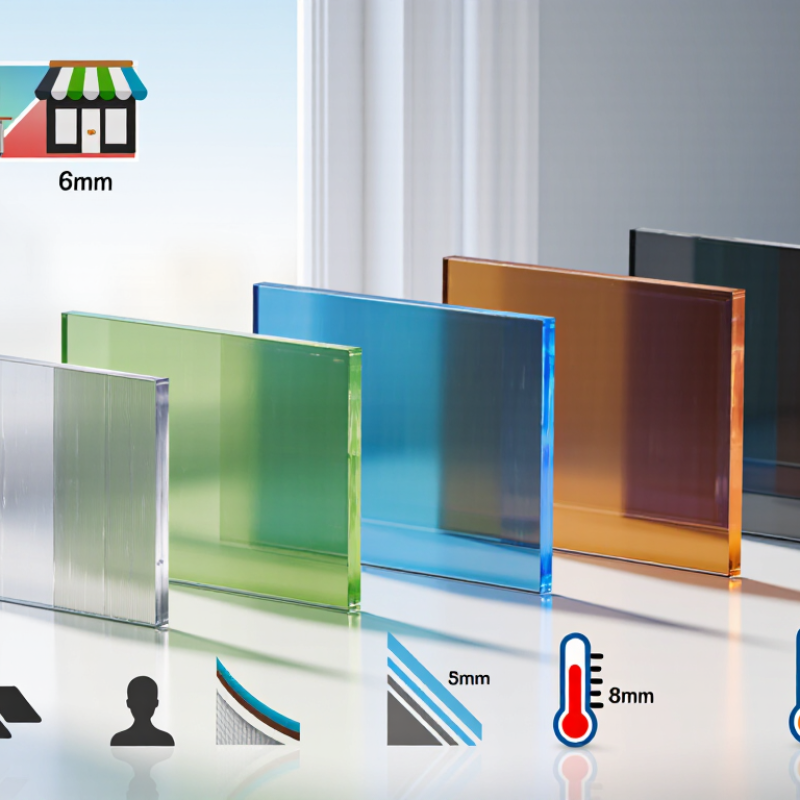
Tinted glass is clear glass with color added during manufacturing or applied as a surface coating. It filters daylight, reduces glare, and can soften solar heat entering a room. Common shades include grey, bronze, green, and blue. The visible color may change under cloudy skies or warm indoor lighting. Check a full-size sample, not only a small brochure piece.
Thickness affects safety, performance, and appearance. Four-millimeter glass is light and economical, but it may feel less rigid in small interior panels. Six millimeters offers a practical balance for many windows and partitions. Eight-millimeter glass provides better stiffness for larger panels, doors, and exposed areas. Ten-millimeter glass looks substantial and resists flexing, yet it weighs considerably more. It also demands stronger frames and more careful handling. Bigger is not always better.
Measure the panel size, fixing method, wind exposure, and local safety requirements before choosing. For bathrooms or ground-floor windows, privacy matters as much as color. Ask whether the glass should be tempered or laminated, because tinted glass alone is not automatically safety glass. On site, installers should inspect edges for chips and confirm the tint direction. Small mistakes show easily. I would also compare visible light transmission and solar heat data, although these figures can be confusing. A qualified glazier can check the full assembly, including seals, frame depth, and drainage. My preference may change after seeing the room’s actual daylight; computer images often look too perfect.
Tinted glass thickness should match its glazing location, not only its appearance. In small interior cabinets, 4mm glass may provide enough rigidity and easy handling. For bedroom windows, office partitions, and shaded doors, 5mm or 6mm glass often offers better stability. Larger panes need closer attention. A wide 6mm sheet can flex noticeably when pushed. I have seen installers underestimate this movement.
Exposure changes the decision. Exterior windows face wind, temperature changes, cleaning pressure, and accidental impact. A 6mm pane may suit a modest opening, while 8mm or 10mm glass can better support large elevations or tall doors. However, thickness alone does not guarantee safety. The glass type, panel size, edge support, frame strength, and installation quality also matter. Small details matter.
Measure the clear opening carefully, then check span tables and local building requirements. A qualified glazier or structural engineer should verify exposed installations. Ask for tested performance data, including wind-load and safety-glazing information. This is where practical judgment matters. A thicker pane can add weight, cost, and hardware stress, while a thinner pane may feel unstable. My own preference is to compare two realistic options instead of choosing the thickest glass automatically. Sometimes, the first estimate is wrong. Recheck it.
Tint shade changes more than appearance. It controls visible light, glare, and the room’s daytime mood. Light grey often keeps interiors bright, while bronze or dark grey creates stronger privacy and softer contrast. A very dark pane may feel comfortable beside a sunny window, but gloomy on a north-facing wall. Ask for the visible light transmission percentage, not only a color sample. A small sample can look different against a full-size opening.
Glass thickness affects strength, weight, and acoustic behavior, but it does not automatically improve solar control. A 4mm pane may suit smaller interior applications, while 6mm to 10mm glass can provide greater rigidity for larger areas. Solar performance depends on the coating, tint composition, window direction, and climate.
Check solar heat gain, ultraviolet reduction, and glare data from tested performance sheets. Clear figures matter more than sales language.
I usually compare samples outdoors at morning and afternoon angles. The same tint can appear greenish under cloudy skies. It happens. Measure the room’s daylight with the glass installed, if possible, because reflections can mislead the eye. Consider heat buildup near furniture, fading fabrics, and nighttime privacy. Lower transmission is not always better; excessive darkness may increase daytime lighting use. I would also verify safety requirements and installation limits with a qualified local glazier, since a suitable thickness depends on size, framing, wind exposure, and fixing method.
How to Choose 4mm to 10mm Tinted Glass in 2026?
Tint selection should begin with safety, not color. A 4mm pane may suit low-risk interior areas, while 6mm, 8mm, or 10mm glass can provide greater stiffness for larger openings. Thickness alone does not make glazing safe. In doors, sidelights, bathrooms, and glass near floors, specify tested tempered or laminated safety glass. Standards such as ANSI Z97.1 and CPSC 16 CFR 1201 define impact-performance requirements in the United States. Local building codes may also require safety glazing markings and approved installation details.
Energy performance needs measured values, not visual guesses. The U.S. Department of Energy estimates that windows can represent 25–30% of residential heating and cooling energy use. The IEA’s Buildings 2023 report states that buildings consume about 30% of global final energy and produce roughly 26% of energy-related emissions. A dark tint can reduce solar heat gain, but it may also reduce daylight and increase lighting demand. Check the glass unit’s solar heat gain coefficient, U-factor, and visible transmittance. Shade is not safety.
Climate and orientation matter. A west-facing 6mm tinted unit may need a lower SHGC than a shaded north-facing window. For commercial projects, compare these values with ASHRAE 90.1 or the locally adopted energy code. Confirm whether the tint is integrated, coated, or laminated; performance changes. I would also request a mock-up beside the actual frame, because indoor lighting can make the same tint appear unexpectedly gray or bronze. Recheck the specification. Small assumptions become expensive replacements.
In 2026, choosing tinted glass means matching appearance with performance. Start with the product, not the color sample. A 4mm pane may suit a small interior opening, while 6mm often feels more stable for ordinary windows. Larger panes may require 8mm or 10mm glass, depending on dimensions, wind exposure, and support conditions. Thickness alone does not determine safety. Ask for visible light transmission, solar control data, heat-treatment details, and edge quality. A color can look elegant indoors but appear much darker outside.
Supplier selection needs practical checking. Request recent test documents, production records, sample consistency, and clear warranty terms. Compare two samples under daylight and warm indoor lighting. I have seen slight shade differences between batches become obvious across one façade. It is easy to overlook this. Ask how the supplier protects glass during transport and whether replacement panels can match later orders. Reliable communication matters when drawings change or dimensions need confirmation.
Installation should follow the glass type and frame design. Dry glazing with gaskets can provide clean maintenance, while wet glazing needs compatible sealant and careful curing. Setting blocks must support the pane without touching its corners. Leave suitable edge clearance for movement and temperature changes. For large tinted panes, ask a qualified installer to review thermal stress and frame deflection. A beautiful panel can still fail through poor drainage or uneven support. I would also inspect the first installed unit before approving the full batch, because the first fitting often reveals assumptions hidden in drawings.
No. It may suit small interior cabinets, but larger or exposed windows often need 6mm, 8mm, or 10mm glass.
It often suits ordinary windows, office partitions, shaded doors, and modest exterior openings. Check the clear span carefully.
A wide sheet can flex when pushed, especially with limited edge support. That movement is easy to underestimate.
No. Safety also depends on glass type, panel size, frame strength, edge support, and installation quality.
Use tested safety glazing for doors, sidelights, bathrooms, and glass installed close to floors. Verify local code requirements.
Dark tint can reduce solar heat gain, but it may also reduce daylight. Check solar gain, insulation, and visible light values.
Yes. A west-facing window may need stronger solar control than a shaded north-facing window.
Request test documents, production records, warranty terms, color samples, heat-treatment details, and performance data.
Use suitable setting blocks, proper edge clearance, compatible seals, and even support. Inspect the first installed panel.
Not always. Thicker glass adds weight, cost, and hardware stress. My first estimate can be wrong, so recheck it.
Choosing 4mm to 10mm tinted glass in 2026 requires balancing appearance, performance, safety, and installation conditions. 4mm-10mm Colored/Tinted Glass is available in various shades and light-transmission levels, allowing designers to control glare, privacy, daylight, and solar heat. Thinner glass may suit smaller interior applications, while thicker options can provide greater strength and improved acoustic or thermal performance for larger windows, façades, doors, and exposed locations. The correct thickness should be determined by panel size, wind pressure, framing system, support conditions, and whether the glass is used as single, laminated, or insulated glazing.
Buyers should also compare solar-control performance, visible light transmission, color consistency, and energy-efficiency goals. Safety glazing may be required in doors, low-level windows, wet areas, and other impact-prone locations, so local building requirements and professional installation guidance are essential. Finally, select a reliable product specification, confirm quality standards and warranty terms, and ensure that handling, edge finishing, sealing, and installation are completed correctly for long-term durability and appearance.

Guoxin Glass