Choosing an Alumunum Sliding Glass Barn Door requires more than matching a frame to your interior style. The door must support daily movement, control drafts, and fit the wall structure safely. In my experience, many selection mistakes begin with attractive photographs. The hardware often receives too little attention. A smooth panel can still rattle if the track, rollers, or floor guide are undersized.
Energy performance deserves careful consideration. The International Energy Agency reported that buildings consumed about 30% of global final energy in 2022. The U.S. Department of Energy also notes that windows can account for 25% to 30% of residential heating and cooling energy use. These figures do not make every glass barn door inefficient. However, they show why glass type, edge seals, and installation quality matter. Look for published U-factor and Solar Heat Gain Coefficient values. The National Fenestration Rating Council provides a recognized framework for comparing these ratings.
Safety and durability need equal weight. Tempered or laminated safety glass can reduce injury risks after breakage. Aluminum should include a suitable finish, corrosion resistance, and, where climate demands it, a thermal break. Check the manufacturer’s tested load limits and warranty conditions. Also inspect the wall before ordering. Heavy doors need dependable structural backing, not just decorative trim.
There is no universal best choice. A coastal home, a humid bathroom, and a dry office require different specifications. Measure twice. Question vague claims. A lower price may conceal weaker rollers or incomplete installation support. This guide compares practical details, verified performance information, and real-world fit before recommending a final door.
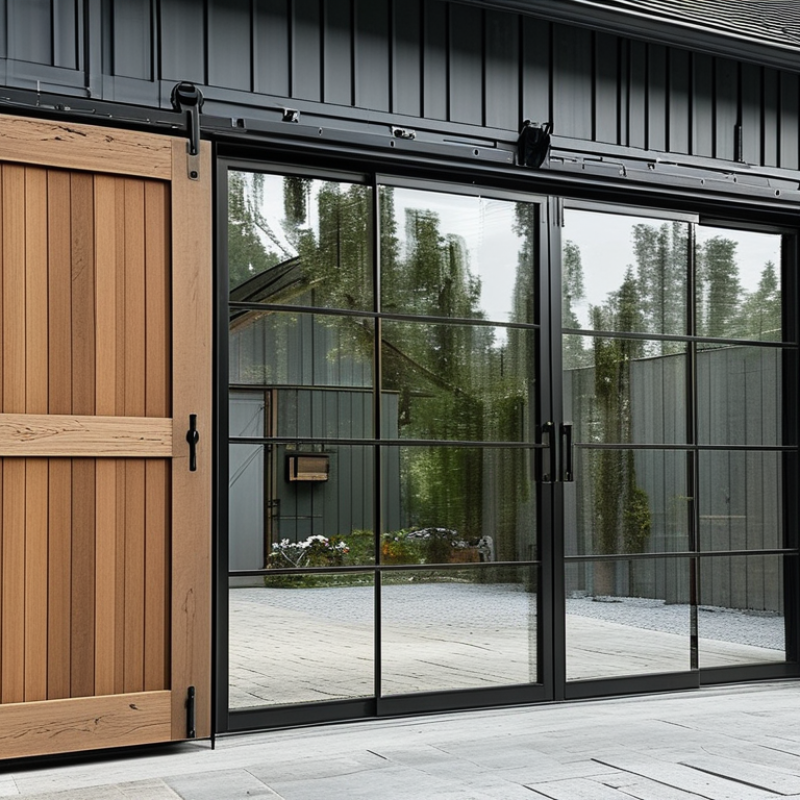
How to Choose an Aluminum Sliding Glass Barn Door?
Define the space before choosing the door. Measure wall width, ceiling height, and the doorway opening separately. The door should extend beyond the opening on both sides. This reduces visible gaps when closed. Leave enough wall space for the panel to slide fully clear. Check nearby switches, trim, furniture, and baseboards. Small gaps matter. I still measure twice, because a beautiful door becomes frustrating when it blocks a light switch.
Next, define the doorway and its function. An interior opening may use a lighter aluminum frame and standard glass. A bathroom or bedroom needs suitable privacy glass. Exterior installations require closer attention to drainage, seals, wind exposure, and thermal performance. The U.S. Department of Energy reports that windows can account for 25% to 30% of residential heating and cooling energy use. Therefore, ask for the glass U-factor and solar heat gain coefficient, not only the frame color. The National Fenestration Rating Council explains that these ratings help compare energy performance consistently.
Installation requirements deserve equal attention. Confirm whether the wall contains solid timber, reinforced framing, masonry, or only drywall. A full glass panel can be heavy. The track must transfer its load into structural support, not decorative trim. Use hardware tested for the door’s actual weight and opening width. Industry fenestration standards, including AAMA/WDMA/CSA 101/I.S.2/A440, emphasize air, water, and structural performance. They do not replace a site inspection. That part is easy to underestimate. A level track, correct floor guide, and accurate plumb check often determine whether the door glides quietly or rattles after installation.
| Decision Area | What to Measure or Check | Practical Requirement | Why It Matters |
|---|---|---|---|
| Available wall space | Measure the clear wall beside the doorway, including trim, switches, outlets, and nearby corners. | Allow a continuous wall area at least equal to the door width plus approximately 50–100 mm of operating clearance. | A sliding barn door needs room to move fully clear of the opening. |
| Door opening width | Measure the finished opening from the left inside edge to the right inside edge at the top, middle, and bottom. | Use the largest measurement when selecting the door panel size. | Repeated measurements reveal uneven walls and help prevent visible gaps. |
| Door opening height | Measure from the finished floor to the top of the opening in at least three locations. | Select a panel that leaves a small, consistent floor clearance according to the hardware instructions. | Adequate clearance helps avoid rubbing while limiting drafts and light gaps. |
| Door overlap | Compare the door panel width with the opening width and the desired privacy level. | Plan a modest overlap on both sides where wall space permits; a single sliding panel may require more clearance on one side. | Overlap improves privacy and reduces visible gaps around the opening. |
| Header and track length | Confirm the track can support the panel travel distance and is compatible with the selected door width. | The track must extend far enough beyond the opening for the panel to clear it completely. | An undersized track can restrict access and place extra stress on the rollers. |
| Wall construction | Identify studs, masonry, concrete, metal framing, or hollow drywall behind the track location. | Fasten the track to structural framing or use anchors specifically rated for the wall material. | The track carries the combined load of the panel and operating forces. |
| Load capacity | Check the total weight of the aluminum-framed glass panel and compare it with the hardware rating. | Choose hardware with a rated capacity higher than the actual door weight, following the manufacturer’s safety margin. | Correct capacity supports smooth movement and reduces premature wear. |
| Glass selection | Consider transparency, privacy, light transmission, and safety glazing requirements. | Use safety-rated glass where required by local building regulations and the installation location. | Glass type affects privacy, appearance, safety, and cleaning needs. |
| Floor condition | Check whether the floor is level and whether the door path contains rugs, thresholds, or raised transitions. | Keep the travel path clear and install a floor guide when included or required. | A level path helps prevent panel sway, rubbing, and noisy operation. |
| Handle and clearance | Review handle projection, adjacent furniture, cabinets, and circulation space. | Maintain enough clearance for the handle and ensure it does not strike walls or nearby objects. | Hardware projection can affect usable passage width and door movement. |
| Installation method | Determine whether the wall can be opened for reinforcement or whether surface-mounted installation is required. | Follow the hardware layout, pre-drill accurately, and verify level before final tightening. | A level, securely mounted track is essential for stable and quiet operation. |
| Maintenance and environment | Consider humidity, exposure to dirt, cleaning frequency, and access to rollers and guides. | Use suitable glass cleaner, wipe aluminum surfaces with a soft cloth, and keep the track free of debris. | Routine cleaning protects visibility, finish quality, and smooth door performance. |
Measure wall width, ceiling height, and doorway opening separately. Measure twice. The panel should extend beyond both sides of the opening.
Leave enough clear wall for the panel to slide completely aside. Check switches, trim, furniture, and baseboards. Small obstructions matter.
Privacy glass works well for bedrooms and bathrooms. Tempered glass suits many interior areas. Laminated glass can improve sound control and hold together after damage.
Check the U-factor and solar heat gain coefficient. A lower U-factor usually means better insulation. A lower solar gain rating can reduce afternoon heat.
It can help when the door separates heated and cooled rooms. Standard aluminum transfers heat quickly. Attractive glass cannot fix a weak frame.
The track must connect to solid timber, reinforced framing, or masonry. Drywall alone may not support a heavy glass panel. Decorative trim is not structural support.
Top-hung hardware keeps the floor visually open but needs a strong header. Bottom-rolling hardware may suit heavier panels. Floor tracks collect dust and grit.
A level track, accurate plumb check, and correct floor guide matter greatly. Inspect rollers, seals, drainage, and adjustment access. Small errors can cause rattling.
Choosing an Alumunum Sliding Glass Barn Door begins with understanding your space, doorway dimensions, wall structure, and installation requirements. Measure the opening carefully and confirm that there is enough room beside the doorway for the door to slide smoothly. Then compare frame materials, glass types, and design styles to find a balance between appearance, durability, natural light, and privacy. Consider whether clear, frosted, tinted, or textured glass best suits the room’s purpose.
Pay close attention to the sliding hardware, weight capacity, track quality, and overall operating performance. Safety glass, secure rollers, reliable stops, insulation, weatherproof seals, and privacy features can improve daily comfort and long-term usability. Finally, review the total cost, installation needs, cleaning requirements, and expected product lifespan. A well-selected Alumunum Sliding Glass Barn Door should provide smooth operation, easy maintenance, dependable safety, and a design that continues to complement the space over time.

 Guoxin Glass