Choosing reliable China Aluminum Sliding Door suppliers requires more than comparing online prices. The right partner should combine manufacturing experience, stable material sourcing, precise production, and dependable communication. An attractive catalog can hide weak testing procedures or inconsistent profiles. Look deeper.
Experienced buyers often begin by checking the supplier’s factory capability. Ask how aluminum alloys are selected, how profiles are extruded, and how surface finishes are inspected. A trustworthy manufacturer should explain its glass options, hardware brands, thermal performance, and water drainage design clearly. Request recent project photos, product samples, and documented quality records. Samples matter.
Supplier verification should also include production capacity and delivery control. A factory may promise short lead times, yet struggle during seasonal demand. Confirm equipment, inspection stages, packaging methods, and replacement procedures before signing an order. Independent certifications can support credibility, but they should match the actual product and market requirements. Do not accept certificates without checking their issuing organization and scope.
Communication reveals practical reliability. Notice whether technical questions receive specific answers or vague promises. A professional supplier will discuss installation tolerances, opening sizes, wind exposure, and maintenance needs. They should also explain what happens when a panel arrives scratched or hardware fails. No supplier is perfect. I have found that honest limitations often indicate stronger long-term cooperation than exaggerated claims. The best choice balances quality, price, service, and evidence. A careful comparison protects your project from costly adjustments and disappointing performance.
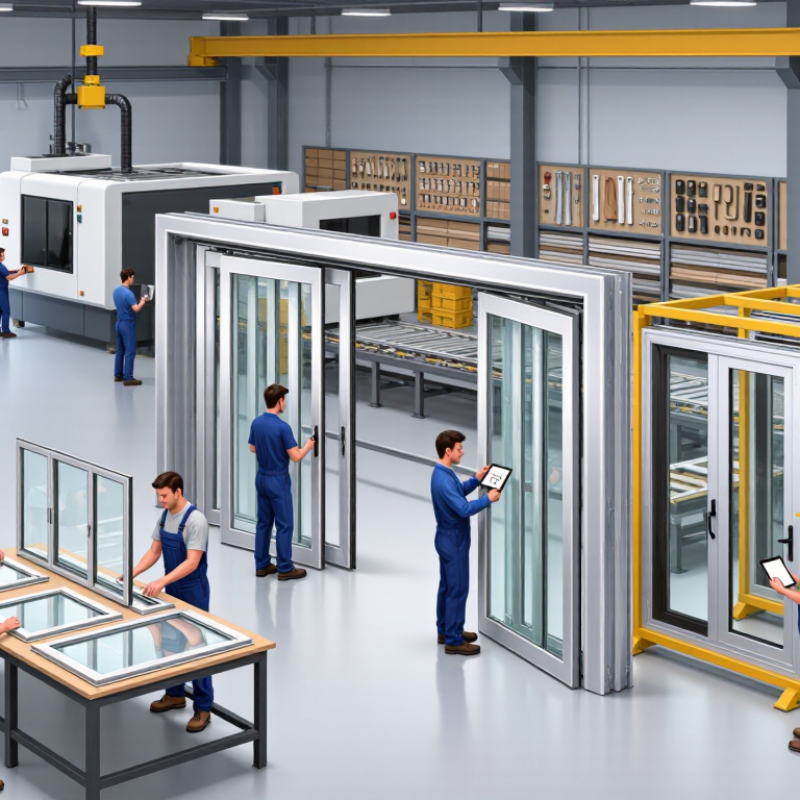
Before comparing China aluminum sliding door suppliers, define your project requirements clearly. Start with site conditions, not catalog photos. Record opening width, height, wall thickness, floor level, and installation direction. A laser measurement helps, but it cannot replace a site inspection. Note exposure to driving rain, coastal salt, strong sunlight, and seasonal temperature changes. These details influence aluminum finish, drainage, seals, glass, and corrosion protection. Choose the operating pattern carefully. Will one panel slide, or will several panels stack? Allow space for tracks and handles.
Define performance targets in measurable terms. Specify thermal insulation, acoustic reduction, air tightness, water resistance, wind-load capacity, and security requirements. Ask an engineer to confirm local building regulations and structural loads. Glass selection deserves care. Low-emissivity double glazing may suit a heated room, while laminated glass can improve safety and noise control. Do not request “premium quality” without numbers. Request test reports, section drawings, surface-finish specifications, warranty terms, and replacement-part availability. A supplier should explain tolerances and installation limits clearly.
Prepare a practical purchasing sheet before requesting quotations. Include quantity, rough opening sizes, color reference, glass type, screen needs, delivery port, target date, and budget range. Ask for a shop drawing before production. I once trusted preliminary dimensions and paid for a costly revision. That mistake still matters. Recheck every measurement against the latest architectural drawing. Leave realistic allowance for packaging, customs procedures, and local installation labor. Photos of the opening, floor transition, and nearby columns can prevent confusing emails. A clear brief makes supplier comparisons fairer, though it may reveal that your original design needs changing.
Supplier qualifications should be verified, not simply displayed in a showroom. Check business registration, export experience, ISO 9001 quality systems, and relevant test reports. Ask whether certificates cover the actual factory and product series. In practical audits, a polished sample can hide weak process control. Request batch records, inspection standards, and corrective-action reports. These documents reveal more than a sales presentation.
Factory capacity also needs measurable evidence. Review extrusion press sizes, powder-coating or anodizing lines, glass-processing equipment, and monthly output records. Compare claimed capacity with recent purchase orders and delivery schedules. The International Aluminium Institute reports that global primary aluminium production exceeded 70 million tonnes in 2023, showing the scale of competition and supply complexity. Large output alone does not guarantee reliable delivery. A smaller factory with stable scheduling may perform better.
Product quality depends on details users can touch. Check frame-wall thickness, alloy grade, coating thickness, corner joints, rollers, seals, and drainage design. Require testing for air infiltration, water penetration, wind resistance, and repeated opening cycles. The IAI states that recycled aluminium uses about 5% of the energy required for primary aluminium, so recycled content deserves verification, not vague claims. A common mistake is focusing on the lowest quotation. It may exclude packaging tests, replacement parts, or installation guidance. Ask for a pilot order, inspect every component, and record defects before approving full production.
How to Choose Top China Aluminum Sliding Door Suppliers?
A reliable supplier should explain the aluminum alloy, profile thickness, and surface treatment clearly. Ask for alloy grades, wall thickness, and finish specifications. Then compare them with your project’s climate and usage. Coastal buildings need stronger corrosion resistance, while busy entrances require thicker profiles and reinforced corners. Request physical samples. A finish can appear excellent under showroom lights but show scratches outdoors. Design also affects performance. Large glass panels bring more daylight, yet they demand accurate calculations for weight, wind pressure, and installation limits. Slim frames look elegant, but they may reduce structural strength if poorly engineered.
Hardware deserves practical attention. Check rollers, locks, handles, tracks, seals, and drainage details as one system. Stainless steel rollers should move smoothly without grinding sounds. Ask how many cycles the supplier tests. Some suppliers provide impressive test reports, but the report may not match the final configuration. Verify the exact model and material. Small details matter. A blocked drainage channel can create water stains after heavy rain. In my experience, quiet operation often reveals better alignment than polished catalog images.
Customization should cover dimensions, colors, glass types, opening directions, screens, and thermal performance. Provide drawings with tolerances, wall conditions, and installation photographs. A professional supplier should return readable shop drawings and clarify what cannot be changed safely. Do not accept every request automatically; excessive customization can increase replacement difficulty and delivery risk. Confirm packaging, inspection records, spare hardware, warranty terms, and installation guidance before payment. A cheaper quotation may win approval, but unclear exclusions can become expensive corrections. Expect a few revisions. Good projects rarely emerge perfectly from the first drawing.
| Evaluation Dimension | Typical Options | Relevant Technical Facts | What to Request from the Supplier | Best Use or Selection Advice |
|---|---|---|---|---|
| Aluminum Alloy | 6063-T5 or 6063-T6 architectural extrusion; 6061 alloy for higher structural strength | 6063 is widely used for architectural profiles because it offers good extrusion quality, corrosion resistance, and surface finishing. 6061 generally provides higher strength but may be less economical for complex profiles. | Alloy and temper designation, material test report, profile drawings, wall-thickness details, and applicable quality-control records | Use 6063 for most residential and commercial sliding-door systems; consider stronger alloys when panels are unusually large or exposed to high structural loads. |
| Profile Construction | Single-chamber, multi-chamber, reinforced, thermally improved, or thermally broken profiles | More chambers can improve stiffness and thermal performance. A thermal break separates interior and exterior aluminum with a low-conductivity polyamide component, reducing heat transfer. | Cross-sectional drawings, profile wall thickness, polyamide-strip specifications if applicable, and calculated or tested thermal values | Choose thermally broken systems for air-conditioned buildings, cold climates, or projects with strict energy requirements. |
| Surface Finish | Anodizing, powder coating, PVDF coating, wood-effect finish, or brushed and polished finishes | Anodizing creates an electrochemically formed oxide layer. Powder coating uses a baked polymer coating. PVDF systems are commonly selected for demanding exterior environments and color retention. | Finish thickness, color standard, coating-process details, color-difference tolerance, adhesion results, and corrosion or weathering test reports | Match the finish to local humidity, salt exposure, ultraviolet exposure, cleaning requirements, and expected service life. |
| Glass Configuration | Single, laminated, tempered, double-glazed, low-emissivity, tinted, frosted, or acoustic glass | Tempered glass is heat-treated for increased strength and breaks into smaller fragments. Laminated glass retains fragments with an interlayer. Insulating glass units typically use two panes separated by an air or gas-filled spacer. | Glass thickness, pane build-up, safety-glass documentation, spacer type, gas filling if specified, and performance values such as U-value or acoustic rating | Use safety glazing where required by local building regulations, especially for large panels, doors near floor level, and high-traffic areas. |
| Door Design | Two-panel, three-panel, multi-panel, pocket sliding, lift-and-slide, corner-opening, or fixed-plus-sliding layouts | Panel size, panel weight, opening width, and track configuration affect hardware load, operating force, deflection, and installation requirements. | Elevation drawings, panel calculations, maximum tested sash dimensions, operating-force data, and installation clearances | Select a system based on opening size and panel weight rather than appearance alone; oversized panels require verified load capacity. |
| Rollers and Tracks | Single or tandem rollers; stainless-steel, steel, or polymer wheels; surface-mounted or recessed tracks | Tandem rollers distribute panel weight more evenly. Adjustable rollers help compensate for minor installation tolerances and maintain smooth movement. | Rated load per panel, wheel and bearing materials, adjustment range, replacement availability, cycle-test results, and track-maintenance instructions | For heavy or frequently used doors, prioritize corrosion-resistant bearings, multiple rollers, replaceable components, and a tested load margin. |
| Locks and Handles | Mortise locks, hook locks, multi-point locks, flush pulls, lever handles, keyed cylinders, or access-control preparation | Lock compatibility depends on profile depth, door thickness, strike position, handing, and cylinder dimensions. Multi-point systems can improve security and compression of seals. | Hardware schedule, corrosion-resistance specification, locking-point layout, keying options, spare-parts list, and security-test documentation where required | Specify hardware together with the profile system to avoid fit problems and confirm that replacement parts will remain available. |
| Seals and Weather Protection | EPDM gaskets, silicone-compatible seals, brush seals, interlocking meeting stiles, drainage channels, and weep holes | Weather performance depends on gasket quality, drainage design, frame alignment, panel overlap, and installation. Proper drainage helps remove water that enters the track area. | Section details, gasket material, air and water test results, drainage layout, corner-joint method, and recommended sealants | For exposed openings, require project-relevant air-infiltration, water-penetration, and wind-load test evidence rather than relying only on product descriptions. |
| Customization Options | Custom dimensions, colors, glass types, grid patterns, screen doors, concealed drainage, automation preparation, and special handle positions | Customization can affect tooling, minimum order quantity, lead time, structural performance, packaging, and installation sequence. | Shop drawings, sample approvals, tolerance limits, tooling charges, prototype process, change-control procedure, and final inspection checklist | Approve a physical sample or production mock-up before mass production when dimensions, finishes, or hardware are non-standard. |
| Structural and Thermal Performance | Wind-load design, deflection control, air tightness, water resistance, sound reduction, and thermal transmittance | Performance depends on the complete door assembly, including frame, glass, seals, hardware, and installation. A higher glass or profile specification does not automatically guarantee better whole-door performance. | Test reports for the complete assembly, design wind pressure, maximum unsupported span, U-value, sound-reduction data, and applicable compliance documents | Compare results using the same test method and project conditions; do not compare isolated component values with whole-door ratings. |
| Manufacturing and Quality Control | Extrusion inspection, CNC cutting, corner assembly, glass installation, pre-shipment inspection, and batch traceability | Consistent tolerances, square frames, accurate diagonal measurements, correct gasket compression, and protected finishes are essential for smooth operation and weather performance. | Inspection plan, allowable tolerances, production photographs, sample inspection report, packaging specification, and corrective-action process | Favor suppliers that can provide traceable inspection records and clear acceptance criteria before shipment. |
| Packaging and Installation Support | Protective film, foam separators, corner protection, wooden crates, installation guides, labeled hardware, and on-site or remote support | Glass and finished aluminum are vulnerable to edge impact, abrasion, moisture, and movement during transport. Correct shimming, leveling, anchoring, and drainage are critical during installation. | Packaging photos, crate dimensions, loading plan, installation manual, hardware labels, replacement-parts policy, and warranty terms | Evaluate delivered cost and installation risk, not only the factory quotation; require clear responsibilities for damage, defects, and field adjustments. |
| Supplier Verification | Document review, sample order, factory audit, reference-project review, third-party inspection, and pre-shipment inspection | A reliable evaluation should confirm technical capability, production consistency, communication quality, lead-time control, and after-sales support. | Business and production documentation, representative samples, test reports, quality certificates, inspection access, and written warranty conditions | Use a documented comparison sheet and approve technical details, samples, drawings, finish, glass, hardware, packaging, and acceptance standards before placing the final order. |
When choosing China aluminum sliding door suppliers, verify certifications against the exact factory and product. ISO 9001 demonstrates a quality management system, not automatic product quality. The ISO Survey 2022 recorded more than 1.2 million ISO 9001 certificates worldwide, so certification alone is not a strong differentiator.
Ask for current test reports from laboratories accredited to ISO/IEC 17025. Check air leakage, water penetration, structural resistance, and operating-cycle results. ASTM E283, E331, and E547 are commonly used methods, while EN 14351-1 and China’s GB/T 8478 may apply to different markets. Confirm the tested door matches your order, including frame size, glass thickness, rollers, seals, and thermal-break design. Small changes matter. Request sample serial numbers and laboratory signatures.
Quality control should include incoming aluminum inspection, alloy verification, coating-thickness checks, corner-joint testing, and final operation checks. A factory should show inspection records, not only polished photographs. UNEP and the GlobalABC reported that buildings consumed about 30% of global final energy in 2022, with operational performance remaining a major concern. Poor seals can increase drafts and cooling demand. I would inspect one finished unit personally when possible. A certificate can look reassuring. It can also hide a gap between the tested sample and mass production. Ask how rejected profiles are isolated, who approves corrective actions, and whether records remain traceable for every shipment.
Price should be tested, not admired. Compare aluminum grade, wall thickness, glass specification, hardware, packaging, and Incoterms line by line. The World Bank Pink Sheet provides monthly aluminum price data, useful for checking whether a quotation reflects market movement. However, aluminum is only one cost element. A cheap frame may hide thinner sections, weaker rollers, or poor protective film.
Lead time needs evidence. Ask for a production schedule showing extrusion, powder coating, glass assembly, inspection, and loading dates. UNCTAD reports that maritime transport carries over 80% of global merchandise trade by volume. Port congestion can therefore change a promised delivery date quickly. Request a realistic buffer, not a perfect date. A neat spreadsheet can still mislead.
Warranty wording matters more than warranty length. Require coverage for frame finish, glass defects, rollers, locks, seals, and water infiltration, with exclusions clearly listed. Ask whether replacement parts remain available after production. After-sales support should include a named contact, response targets, installation guidance, and photo-based troubleshooting. Request quality records, test reports, and a sample corner before ordering. ISO 9001 certification supports process control, but it does not guarantee every door. That distinction is easy to miss. One practical improvement is a small trial order, although it adds cost and time.
Check business registration, export records, and the actual factory address. Request ISO 9001 records and product-specific test reports. Certificates alone prove little. Ask for batch records, inspection rules, and corrective-action reports. A polished showroom can hide weak production control.
No. ISO 9001 shows a quality management system, not perfect doors. Check whether the certificate covers the factory making your order. Review recent inspection records and rejected-product procedures. I would still inspect finished units personally. That step is inconvenient.
Review extrusion presses, coating lines, glass equipment, and monthly output records. Compare claimed capacity with recent orders and delivery schedules. A large factory is not automatically more reliable. A smaller factory may schedule better. Verify the numbers.
Check frame-wall thickness, alloy grade, coating thickness, rollers, seals, and drainage holes. Inspect corner joints for gaps, distortion, or rough finishing. Confirm glass thickness and thermal-break construction. Touch the frame. Do not judge from photographs alone.
Request tests for air leakage, water penetration, wind resistance, and repeated opening cycles. Use reports from laboratories accredited to ISO/IEC 17025. Confirm the tested door matches your order exactly. Frame size, glass, seals, and rollers must match. Small changes matter.
Compare alloy grade, wall thickness, glass, hardware, packaging, and delivery terms line by line. Check whether replacement parts and installation guidance are included. A low quotation may hide thinner profiles or weaker rollers. The cheapest option can become expensive later. I sometimes overlook packaging.
Request dates for extrusion, coating, glass assembly, inspection, and loading. Include extra time for port delays and unexpected rework. Global shipping can change quickly. Ask for a realistic buffer, not a perfect promise. Spreadsheets can mislead.
Require clear coverage for finishes, glass, rollers, locks, seals, and water infiltration. Check exclusions and replacement-part availability. Ask for a named contact and response targets. Request installation guidance and photo-based troubleshooting. A small trial order adds cost, but reduces uncertainty.
Choosing the right China Aluminum Sliding Door supplier begins with clearly defining your project requirements, including door dimensions, application, opening style, thermal performance, appearance, and expected order volume. A reliable supplier should demonstrate strong qualifications, modern factory capacity, stable production processes, and consistent product quality. Review the available materials, frame designs, glass options, hardware, colors, finishes, and customization capabilities to ensure the doors match your architectural and functional needs.
Before making a decision, verify relevant certifications, product testing standards, inspection procedures, and quality control systems. It is also important to compare quotations based on complete specifications rather than price alone. Confirm production lead times, packaging and delivery arrangements, warranty coverage, replacement policies, and after-sales support. By evaluating these factors together, buyers can reduce project risks, improve purchasing efficiency, and select a dependable supplier capable of delivering durable, attractive, and properly engineered Aluminum Sliding Door solutions.

Guoxin Glass