Is Top 10mm Tempered Glass Glass For Windows really worth the extra cost? The answer depends on window size, exposure, frame design, and safety requirements. In real projects, thicker glass can feel reassuring when large panes face busy walkways or strong coastal winds. However, thickness alone does not guarantee better performance.
Dr. Helen Sanders, a recognized building-envelope and fenestration specialist, has stated, “Energy performance depends on the whole window, not glass alone.” Her point matters. A 10mm tempered pane may offer improved impact resistance and reduced vibration compared with thinner glass. Yet the frame, spacer, seal, coating, and installation method also affect comfort and durability. A poorly sealed unit can still develop condensation, air leakage, or edge failure.
The weight is substantial. A 10mm glass sheet weighs roughly 25 kilograms per square meter before framing. Older frames may not handle that load safely. Hinges, anchors, and lifting equipment deserve attention. They are easy to overlook.
There is also a practical weakness. Tempered glass is strong, but it can break suddenly into small fragments. It cannot be cut or drilled after tempering. Measurements must be accurate before production.
This guide compares the real advantages and limitations of 10mm Tempered Glass Glass For Windows. It examines safety, thermal performance, sound control, price, and installation demands. Some claims may sound convincing, but not every home needs 10mm glass. Sometimes, laminated or insulated glass provides a better-balanced solution. That is the uncomfortable part: thicker is not always smarter.
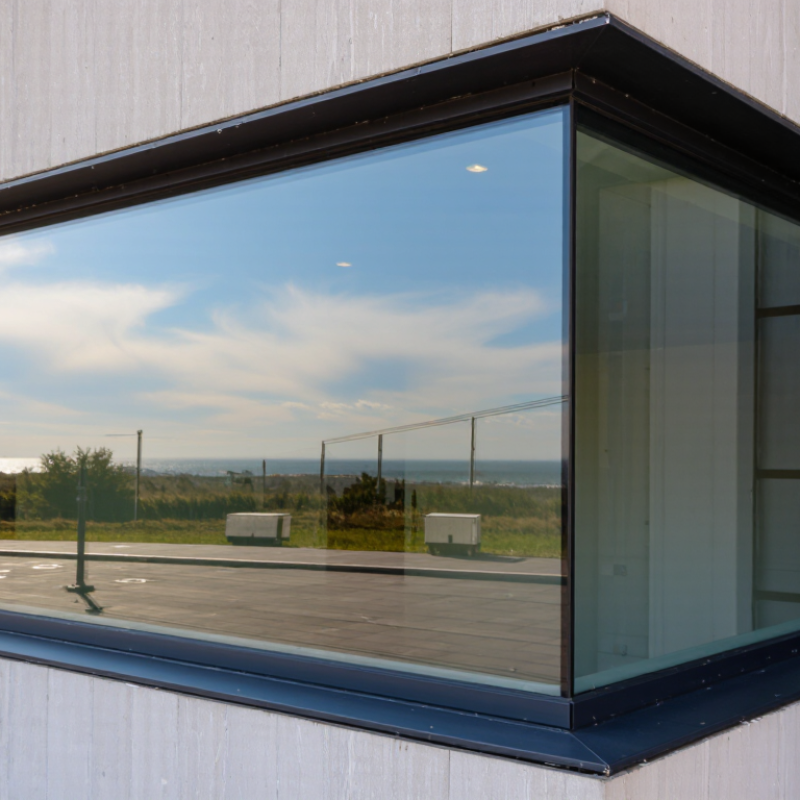
10mm tempered glass for windows is a heat-treated safety glass, not simply thicker ordinary glass. It is about 3/8 inch thick and is heated, then rapidly cooled to create stronger surface compression. The National Glass Association explains that tempered glass can be approximately four times stronger than annealed glass of the same thickness. If it breaks, it usually crumbles into smaller, less razor-like pieces. That matters beside doors, low windows, and busy walkways.
ASTM C1048 sets requirements for heat-treated flat glass, including quality and performance classification. However, 10mm thickness alone does not prove that a window is suitable. Size, wind load, frame design, edge quality, and installation must also be checked. A large pane may still need engineering review.
I once assumed thicker glass automatically meant better insulation. That was wrong. The U.S. Department of Energy’s Efficient Windows Collaborative identifies U-factor as the key measure of heat transfer, and lower values indicate better insulation. Tempered glass can improve impact resistance, but it does not automatically deliver a low U-factor.
Low-emissivity coatings, insulated spacers, gas-filled cavities, and a well-sealed frame often influence energy performance more. It can still feel cold near the edge. That detail is easy to miss. For a sunny room, solar heat gain, visible light, and glare should also be assessed before selecting 10mm tempered glass.
10mm tempered glass starts as annealed float glass. Fabricators cut, drill, and polish it before heating. Once tempered, it cannot be resized safely. The pane enters a furnace near 620–700°C, depending on its composition and equipment. It then meets powerful air jets on both surfaces. This sudden cooling compresses the outer layers. The center remains under tension, giving the glass greater impact resistance than untreated glass.
The result is not judged by appearance alone. Inspectors check thickness, dimensions, edge quality, flatness, and visible flaws. A fragmentation test breaks a sample, then technicians count and examine the pieces. Properly tempered glass should break into many small, relatively blunt particles. Surface stress may be measured with optical equipment. Some projects also require heat-soak testing to reduce spontaneous breakage linked to nickel sulfide inclusions. Requirements differ by region, so applicable standards, such as EN 12150 or ASTM C1048, must be confirmed.
On a real window, 10mm glass is heavy. Frame capacity, lifting methods, and setting blocks need careful review. A clean surface can hide an edge defect. Even a small nick may weaken the pane. I would not accept a certificate without matching its batch, dimensions, and testing standard. That check is easy to skip. It should not be. Tempering improves safety after breakage, but it does not make glass unbreakable.
10mm tempered glass offers a strong, clean option for many window applications. Its greater thickness helps resist everyday impacts, wind pressure, and temperature changes better than thinner glass. In a busy home, it can handle a ball striking the pane or a firm door slam more confidently. When it breaks, it usually crumbles into small granules instead of sharp, large shards. That feature can reduce serious cutting injuries.
The benefits have limits. Tempered glass is not automatically energy efficient. A 10mm pane alone may still allow heat to pass through during hot afternoons. It also weighs considerably more, so the frame, hinges, seals, and wall connections need careful inspection. Once tempered, the glass cannot be cut or drilled safely. Every hole and edge detail must be planned before processing. Sound reduction may improve slightly, but thickness alone does not block traffic noise effectively.
A practical installation check should include visible edge quality, correct support blocks, drainage paths, and enough clearance around the pane. Edge damage is easy to miss and may cause delayed breakage. I have seen attractive glazing fail because the frame was too tight, not because the glass was poorly made. That detail is easy to underestimate. For doors, low-level glazing, or areas needing glass retention after breakage, laminated glass may deserve comparison. Local building requirements and a qualified glazier should guide the final specification.
10mm tempered glass suits windows that need strength, safety, and a clean modern appearance. It works well in large residential windows, balcony enclosures, office facades, and low-rise commercial spaces. Its thicker structure handles everyday impact better than thinner glass. It also tolerates temperature changes more effectively than ordinary annealed glass.
Picture a wide living-room window facing strong afternoon sun. The glass can reduce the risk of thermal cracking when correctly specified. However, thickness alone does not guarantee performance. Frame quality, panel size, wind pressure, and edge protection matter just as much. Tempered glass may break into small granules, but it cannot be cut or drilled after treatment. This detail is often overlooked.
Tips: Ask a qualified glazier to check span, wind load, and local safety requirements. Use laminated glass where broken pieces must remain attached, such as near doors or busy walkways. Check the edges carefully during installation. A tiny chip can become a serious weakness later.
For bathrooms, interior partitions, and sheltered windows, 10mm tempered glass may be more than necessary. It can add weight and cost without improving insulation. Double glazing may perform better in cold or noisy areas. I would not choose 10mm glass by thickness alone. The best option depends on the window’s location, exposure, frame, and safety purpose.
Approximate glass mass increases with thickness. Standard soda-lime glass weighs about 2.5 kg per square meter for every millimeter of thickness, so 10mm glass weighs approximately 25 kg/m² before framing or hardware is added.
10mm tempered glass can be suitable for large window panels, floor-to-ceiling glazing, doors, and areas exposed to higher impact or wind loads when the design is properly engineered. It is heavier and usually more costly than 6mm or 8mm glass, so it is not automatically the best choice for every window. Final thickness should be selected according to panel size, wind pressure, framing, support conditions, and applicable safety standards.
Is 10mm tempered glass worth the cost? Sometimes, yes. It depends on the window’s size, location, and frame strength. In renovation projects, thicker glass feels more solid and reduces vibration near busy roads. A 10mm pane also handles stronger temperature changes than many thinner options. However, it weighs about 25 kilograms per square metre. Heavy glass needs suitable hinges, seals, and structural support.
Tempered glass is safer than ordinary glass because it breaks into small, blunt pieces. It is not unbreakable. Poor edge handling, incorrect installation, or sudden impact can still cause failure. The extra thickness may also improve sound control, but the result depends on air gaps, frame quality, and the glass construction. Paying more for thickness alone can disappoint.
Tips: Check the opening size, frame capacity, and local safety requirements before ordering. Ask for certified thickness and heat-treatment documentation. Inspect the edges for chips before installation. Do not assume thicker glass solves every noise problem. In my view, 10mm tempered glass makes sense for large windows, low-level glazing, and exposed areas. For a small bedroom window, 6mm or 8mm may perform adequately and cost less. I would still compare the full installed price, not only the glass quotation.
| Evaluation Dimension | Typical 10mm Tempered Glass Data | What It Means for Windows | Value Assessment |
|---|---|---|---|
| Nominal thickness | 10 mm, approximately 3/8 inch | Provides more stiffness and impact resistance than thinner 4–6 mm glass, but adds weight. | Good for large or exposed panes |
| Approximate weight | About 25 kg/m², or 5.1 lb/ft² | Frames, hinges, hardware, transport, and installation must be designed for the additional load. | Higher structural requirement |
| Safety performance | When correctly processed and certified, tempered glass breaks into many smaller, relatively blunt granules instead of large sharp shards. | Reduces laceration risk after breakage, but it is not unbreakable or completely risk-free. | Strong safety benefit |
| Mechanical strength | Generally about 4–5 times the bending strength of comparable annealed glass, subject to applicable standards and processing quality. | Better suited to wind exposure, doors, partitions, and larger glazed areas than ordinary annealed glass. | Worth considering for demanding locations |
| Visible light transmission | Approximately 88–90% for clear glass, depending on iron content, coating, and surface condition. | Allows substantial daylight while providing a thicker, more rigid pane. | Good daylight performance |
| Thermal insulation | A single 10mm clear pane typically has a center-of-glass U-value around 5.7 W/m²·K; the exact value varies by specification. | Increasing thickness alone provides limited insulation. Double glazing, low-emissivity coatings, and gas-filled cavities are more effective. | Not a cost-effective thermal upgrade by itself |
| Solar and glare control | Clear tempered glass does not inherently block significant solar heat or glare; performance depends on tint or solar-control coatings. | A thicker clear pane may still allow overheating in sunny orientations. | Consider coatings for warm climates |
| Sound reduction | A single 10mm pane may provide roughly 35–38 dB of sound reduction, depending on frequency, frame, seals, and testing method. | It can outperform thinner single glass, but laminated or asymmetric insulating glass is usually better for noise control. | Moderate improvement |
| Breakage and replacement | Tempered glass cannot normally be cut, drilled, or modified after heat treatment. If it breaks, the entire pane must be replaced. | Final dimensions, holes, edgework, and hardware cutouts must be confirmed before tempering. | Requires accurate planning |
| Thermal-stress resistance | Tempered glass generally tolerates greater temperature variation than annealed glass, although shading, edge damage, and uneven heating can still cause failure. | Useful near doors, exterior façades, and areas exposed to changing sunlight, provided installation follows the glazing standard. | Useful durability advantage |
| Indicative material cost | Often about USD 45–100 per m² for basic clear 10mm tempered glass, excluding taxes, shipping, special shapes, coatings, and installation. Local prices vary substantially. | It normally costs more than thinner annealed glass and may require stronger framing and handling equipment. | Higher upfront cost |
| Overall suitability | Best where safety glazing, greater stiffness, impact resistance, or large pane sizes are priorities. | For energy efficiency, use it as part of a properly designed double- or triple-glazed unit rather than relying on thickness alone. | Worth the cost for safety and size; not solely for insulation |
Note: Values are typical industry ranges for clear 10mm tempered glass. Final performance and compliance depend on the glass standard, pane dimensions, edge treatment, frame system, installation quality, climate, and local building requirements.
It is heat-treated safety glass, about 3/8 inch thick. Heating and rapid cooling strengthen its surface. It is not simply thick ordinary glass.
It usually crumbles into small, blunt granules. This can reduce serious cuts near doors, low windows, and walkways. It is safer, not harmless.
No. Panel size, wind pressure, frame design, and edge quality also matter. A large pane may need engineering review. Thickness alone is not enough.
Not automatically. A single pane can still transfer heat during hot afternoons. Lower heat loss often depends on coatings, sealed spaces, gas filling, and frame quality.
It can suit large home windows, balcony enclosures, office façades, and low-rise commercial spaces. It handles everyday impacts and temperature changes better than thinner ordinary glass. The location still matters.
No. Every hole, cutout, and edge detail must be planned beforehand. Later drilling can cause sudden breakage.
Inspect the edges, support blocks, drainage paths, and clearance around the pane. The frame must not press tightly against the glass. A tiny edge chip can become a serious weakness.
No. Bathrooms, sheltered windows, and interior partitions may need less glass. Cold or noisy rooms may benefit more from insulated glazing. For doors and busy walkways, laminated glass deserves comparison. I would not choose thickness alone.
10mm Tempered Glass Glass For Windows is a strong and reliable glazing option designed for applications that require improved safety, durability, and thermal performance. Its 10mm thickness provides greater rigidity than thinner glass, while the tempering process strengthens it through controlled heating and rapid cooling. During production, the glass is carefully inspected for clarity, thickness, surface defects, and safety performance. If broken, it typically crumbles into smaller granular pieces rather than large, sharp shards, reducing the risk of serious injury.
This type of glass offers excellent resistance to impact, wind pressure, temperature changes, and everyday wear, making it suitable for large windows, storefronts, offices, modern homes, and other demanding spaces. However, it is heavier, more expensive, and cannot be cut or modified after tempering. Whether it is worth the cost depends on the project’s size, safety requirements, energy goals, and budget. For windows needing extra strength and long-term reliability, 10mm tempered glass can be a worthwhile investment.

Guoxin Glass