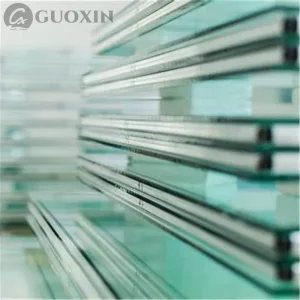
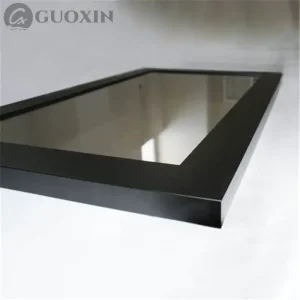
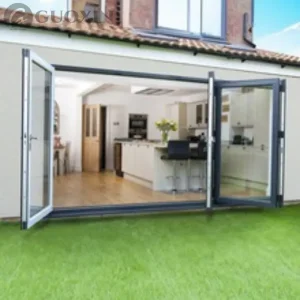
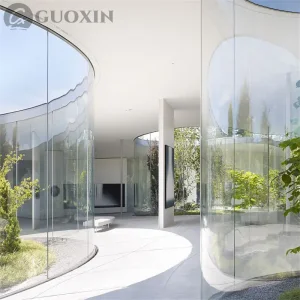
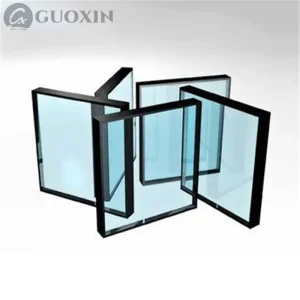
Explore our premium architectural and commercial-grade tempered, insulated, and Low-E glass solutions, custom-engineered to meet stringent international performance standards.
Jiangsu Guoxin Glass Co., Ltd. was founded in 2006 and has since grown into a leading enterprise in the glass industry, with a stable and successful track record spanning two decades. Our company has accumulated a wealth of experience in the research and development, production, and marketing of aluminum windows, fireproof Glass, laminated glass, and insulated glass. This expertise has allowed us to innovate and produce high-quality products that meet the diverse needs of our customers.
In modern architecture, the glass facade is no longer merely a transparent barrier; it is a complex, active thermodynamic shield. As global building codes enforce increasingly stringent carbon-neutral targets, Tempered Low-E (low-emissivity) glass has become the primary mechanism to mitigate thermal transfer in high-performance building envelopes.
"Our mission is to bridge advanced material science with industrial-scale fabrication, delivering energy savings without compromising structural integrity or visual aesthetics."
Understanding the transition from passive coatings to dynamic, multi-silver layer sputter deposition technologies.
Moving beyond double-silver coating technologies, the triple-silver Low-E configuration utilizes three independent, nano-scale layers of pure silver. This structure provides an exceptional selectivity index (VLT/SHGC ratio approaching 2.0), maximizing natural daylighting while rejecting up to 90% of infrared radiation.
By pairing a high-performance tempered Low-E pane with an ultra-thin vacuum cavity (0.1mm to 0.3mm), the thermal performance of a standard double-glazed IGU is dramatically surpassed. Center-of-glass U-values drop to levels comparable to solid insulated walls (down to 0.4 W/m²·K), driving passive house standards.
The future of low-emissivity glass lies in active intelligence. Integrating Electrochromic (EC) thin-films with magnetron-sputtered Low-E coatings allows building automation systems to alter tint states dynamically. This real-time response to external solar irradiance significantly reduces peak HVAC energy loads.
A systematic comparison of glass configurations tailored for diverse commercial, institutional, and residential applications.
| Application Sector | Recommended Low-E Configuration | Visible Light Transmittance (VLT) | Solar Heat Gain Coefficient (SHGC) | U-Value (W/m²·K - Argon Filled) |
|---|---|---|---|---|
| Commercial High-Rise Curtain Walls | Triple Silver Soft-Coat (Surface #2) + Clear/Tinted Lami | 60% - 68% | 0.25 - 0.28 | 1.1 - 1.3 |
| Residential Passive Houses | Double Glazed - Single/Double Low-E (Surface #2 & #3) | 70% - 75% | 0.35 - 0.45 | 0.9 - 1.1 |
| Hospitality & Soundproof Façades | Acoustic Laminated + Low-E Insulated Units | 55% - 62% | 0.28 - 0.32 | 1.2 - 1.4 |
| Industrial Cold-Chain / Display | Heated Pyrolytic Low-E + Argon Double-IGU | 75% - 80% | 0.55 - 0.65 | 1.4 - 1.6 |
Choosing the correct glazing configuration involves balancing thermal insulation and daylight autonomy. For instance, in hot climates (cooling-dominated zones), a low SHGC is paramount to limit solar heat ingress, requiring spectrally selective soft-coat Low-E glass. Conversely, in cold climates (heating-dominated zones), a higher SHGC might be specified to capitalize on passive solar heat gain during winter months, combined with an exceptionally low U-value to trap internal heat.

Our team is composed of highly skilled professionals with a strong background in materials science and engineering. This technical expertise has been instrumental in our ability to develop a comprehensive range of high-end glass products. These products are not only aesthetically pleasing but also offer superior performance in terms of durability, energy efficiency, and safety. As a result, they have found widespread application in various sectors such as construction, where they enhance the structural integrity and thermal performance of buildings; In decoration, where they add elegance and sophistication to interior and exterior designs; And in safety protection, where they provide robust barriers against external threats.
From the very beginning, we have embraced the management principles of "quality first, customer first, and credit-based." This philosophy has guided our operations and has been the cornerstone of our success. We are committed to delivering products of the highest quality and providing exceptional customer service. Our team works closely with clients to understand their specific requirements and to offer tailored solutions that exceed their expectations. We believe that building strong, long-lasting relationships with our customers is essential for our mutual growth and success.
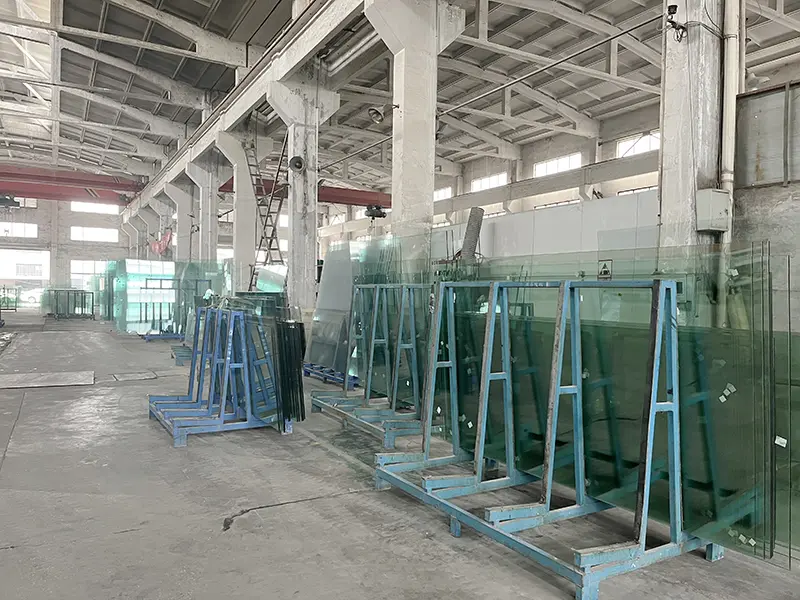
Our state-of-the-art production facility houses multiple advanced production lines, each equipped with cutting-edge technology. This allows us to produce a wide variety of high-quality glass doors and windows with remarkable precision and efficiency. From tempered glass that offers enhanced safety to energy-efficient insulating glass units, our products meet and exceed industry standards.
With 20 years of rich production and operation experience under our belt, we have mastered the art of crafting durable and aesthetically pleasing products. Our reputation has spread far and wide, not only across domestic markets but also reaching international shores. As a leading source manufacturer in China, we take pride in supplying top-notch glass doors and windows to customers around the globe.
Mitigating structural risks and ensuring localized standard certification for seamless building approval.
Our tempered Low-E glass assemblies comply with standard specifications globally, including SGCC (North America), CE EN1279 (Europe), AS/NZS 2208 (Australia/New Zealand), and 3C (China). Full batch traceability documentation is provided with every shipment.
For sputtered soft-coat Low-E glass, the metallic silver layer is susceptible to oxidation if exposed to air. We utilize automated edge-deletion systems to remove the coating precisely along the perimeter (typically 10-12mm), ensuring a robust, hermetic primary sealant bond in the IGU.
Low-E coatings absorb solar radiation, which can lead to high thermal gradients between the center and edge of the glass pane. We provide comprehensive thermal stress analysis for projects, specifying post-temper heat soaking (HST) to mitigate spontaneous breakage risk.
Insights directly from our engineering team on designing, specifying, and sourcing OEM Tempered Low-E glass.
Hard-coat Low-E is applied online at high temperatures during float glass manufacturing, resulting in a highly durable oxide layer suitable for single glazing. Soft-coat Low-E is applied offline via magnetron sputtering vacuum deposition. While soft-coat is mechanically fragile and must be integrated into insulated glass units (IGUs) with edge deletion, it offers vastly superior solar control, lower emissivity levels (≤ 0.03 vs 0.15), and lower overall U-values.
For dominant heating climates where retaining indoor heat is the priority, the Low-E coating should be placed on surface #3 (the outer face of the inner pane). For dominant cooling climates where rejecting solar energy is the priority, the coating should be placed on surface #2 (the inner face of the outer pane) to redirect infrared heat before it penetrates the glazing cavity.
Tempered glass can contain microscopic nickel sulfide (NiS) inclusions. When the glass is exposed to thermal variations, these inclusions can expand over time, potentially leading to spontaneous structural failure. Heat-soak testing accelerates this expansion in a controlled oven chamber, intentionally breaking unstable panes before they are dispatched to construction sites, safeguarding high-rise installations.
Replacing the dry air inside an IGU cavity with a heavier, less conductive noble gas like Argon or Krypton significantly dampens convective thermal transfer. Combining an Argon fill (typically 90% concentration) with a double-silver Low-E coating lowers the U-value from approximately 1.6 W/m²·K to 1.1 W/m²·K, substantially improving HVAC efficiency.
We provide extensive custom engineering, including bespoke glass dimensions (up to jumbo sizes), glass substrates (clear, ultra-clear low-iron, tinted), spacer widths (6mm to 20mm, including warm-edge spacers), silk-screen or ceramic frit patterns, acoustic laminating configurations, and dynamic hardware integration.
Explore our secondary line of high-performance architectural solutions, custom-engineered for maximum environmental isolation and design versatility.
In today's rapidly globalizing economy, we recognize the importance of international collaboration. Jiangsu Guoxin Glass Co., Ltd. is sincerely committed to partnering with enterprises from around the world. We are eager to explore new markets, share our knowledge and expertise, and learn from our partners. By working together, we aim to create innovative solutions and drive industry advancements that benefit all parties involved. We are confident that through these collaborations, we can achieve a win-win situation, fostering economic growth and sustainable development on a global scale.
Contact Our Technical Sales Team Guoxin Glass