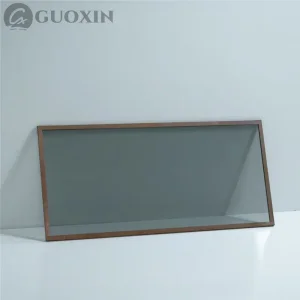
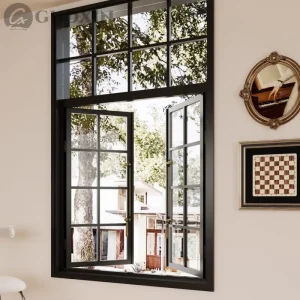
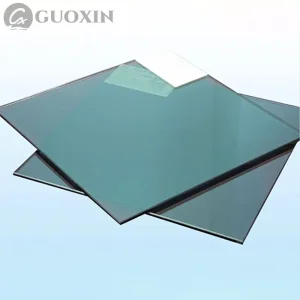
Explore our foundational lines of specialty glazing systems and custom-fabricated windows optimized for commercial and industrial use.
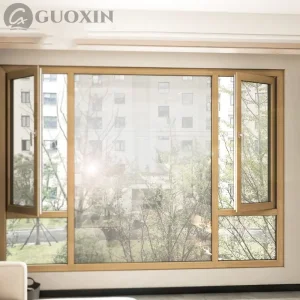
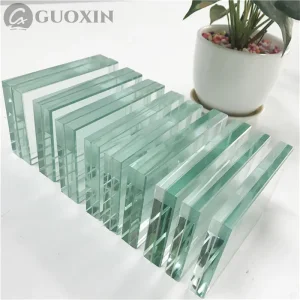
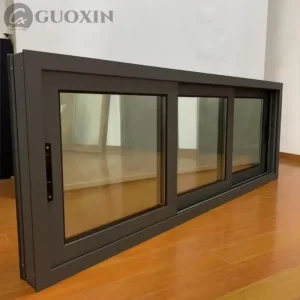
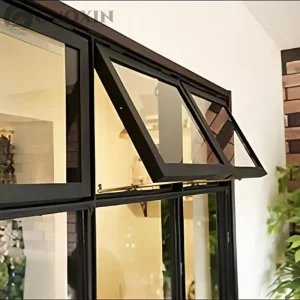
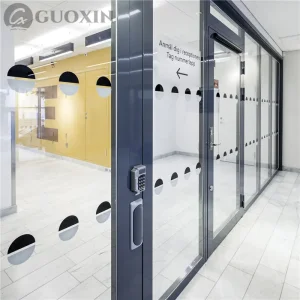
Analysis of global architectural demands, thermal barriers, and spatial design trends in commercial spaces.
Interior configurations must adapt dynamically. B2B projects require bi-fold mechanisms that can divide a corporate boardroom into individual seminar areas within minutes. Track hardware and weight distribution systems are engineered to prevent floor damage while handling heavy glass panels.
Unlike exterior doors focusing on thermal barrier ratings, inside bi-fold doors prioritize acoustic mitigation (STC ratings). High-performance assemblies feature integrated EPDM gaskets, magnetic closures, and custom laminated glass to restrict sound transmission across rooms.
Concealed hinges, minimalist frames, and customized glass types allow interior doors to align with high-end architectural concepts. Designers can specify frosted, patterned, or switchable smart glass to balance natural light distribution with private zoning.
Jiangsu Guoxin Glass Co., Ltd. was established in 2006. Over the last two decades, the company has expanded its manufacturing footprints to address the demand for high-end structural glazing and custom architectural glass systems.
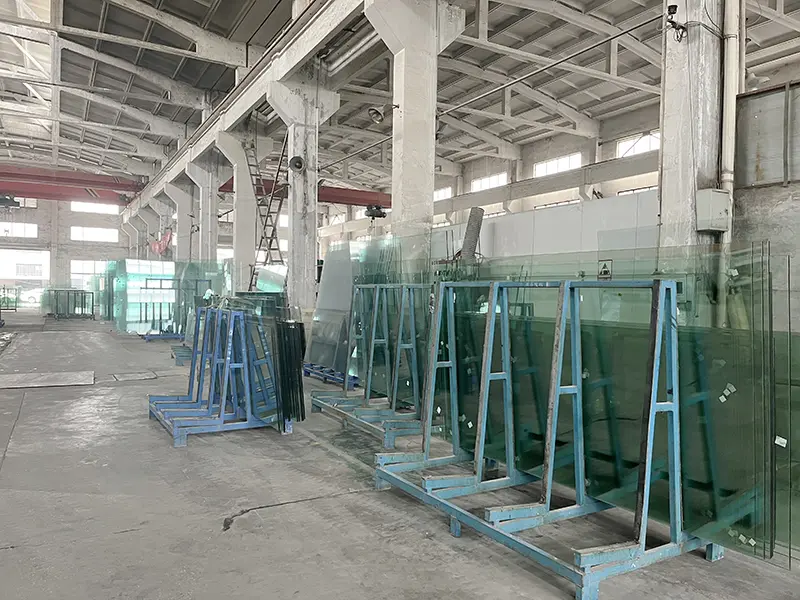
Our facility integrates deep glass tempering, multi-layer lamination, and aluminum frame profiling in a unified workflow. This vertical integration reduces lead times for complex OEM and ODM procurement contracts, offering a reliable supply chain for large projects.
Through close coordination between our materials engineering department and assembly technicians, we deliver systems engineered for durability, safety, and acoustic performance.
Our supply chain spans key architectural markets worldwide. Guoxin's engineering team designs systems tailored to different regional building codes, wind loads, and safety standards.
Whether processing orders for heavy-duty commercial projects, luxury residential properties, or high-security developments, we customize glass thickness, aluminum alloy temper, and hardware specifications to meet project-specific requirements.
We work closely with global partners to manage logistics, verify compliance certifications, and provide comprehensive technical documentation, aiming for a smooth installation phase.

Technical parameters for architects, project managers, and commercial procurement departments.
| Performance Parameter | Standard Specification | Customizable Options (OEM Support) |
|---|---|---|
| Frame Material | Aluminum Alloy 6063-T5 (High durability) | 6063-T6, Thermal break frame profiles |
| Glass Configuration | 5mm + 9A + 5mm Insulated Tempered Glass | 6mm - 19mm Tempered, SGP Laminated, Fireproof, Reflective |
| Acoustic Rating (STC) | STC 32 dB (Standard office partitions) | Up to STC 45 dB with specialized acoustic PVB interlayers |
| Track Design | Top-hung heavy-duty roller track | Dual-point bottom-guided track, Recessed low-profile sill |
| Surface Treatment | Anodized matte silver / Powder coated black | Fluorocarbon (PVDF) coating, Wood-grain sublimation, Custom RAL |
| Hardware Lifespan | Class 4 Certified (50,000 open/close cycles) | Class 5 Certified heavy-duty rollers (100,000+ cycles) |
Interior folding door configurations vary according to regional styles and practical needs. In European architectures, slim-profile profiles with acoustic double-glazing are commonly specified for home offices and dynamic living areas. Conversely, North American commercial applications focus on heavy-duty, wider stiles capable of incorporating thick laminated security glass, separating public lobby areas from private meeting rooms. In the Asia-Pacific region, compact urban homes utilize interior bi-folds as a space-saving alternative to traditional swing doors, providing a flexible layout while maintaining access to natural light.
The interior partition market is advancing toward smart building integration and eco-conscious manufacturing. Key trends include the integration of PDLC (Polymer Dispersed Liquid Crystal) switchable smart glass, allowing panels to shift from transparent to opaque instantly via smart home systems or wall switches. Additionally, manufacturers are working to reduce the carbon footprint of structural components by sourcing post-consumer recycled aluminum, applying low-VOC powder coatings, and utilizing energy-efficient glass units to meet LEED and BREEAM green building certifications.
B2B procurement professionals, wholesalers, and general contractors evaluate suppliers based on risk mitigation, manufacturing capacity, and code compliance. Procurement specifications prioritize track mechanism durability, panel deflection limits under load, and glass impact certification (e.g., ANSI Z97.1, EN 12600). Strategic buyers seek manufacturers capable of providing customized sizing, pre-assembled frame components to reduce onsite installation costs, and verified QA test reports for structural safety and acoustic isolation.
With 20 years of experience, Guoxin manages the entire production cycle, from raw glass processing to CNC frame machining and quality control. By manufacturing glass components internally (tempered, laminated, insulated, fire-resistant), we optimize structural fits, maintain tight tolerances, and reduce third-party material markups. Our inside bi-fold systems undergo continuous load and cycle testing, providing reliable structural integrity and long-term durability for high-traffic environments.
Expert insights on hardware durability, acoustic optimization, and OEM procurement guidelines.
Explore our main product series, featuring architectural folding assemblies and specialized glass solutions.
 Guoxin Glass