Cheap Clear Glass Tempered Supplier & Factory

High-Performance Toughened Architectural Glass: Direct-from-Factory Pricing, Uncompromising Structural Integrity, and Engineered Global Supply Systems.

The Engineering Paradigm of
Clear Tempered Glass

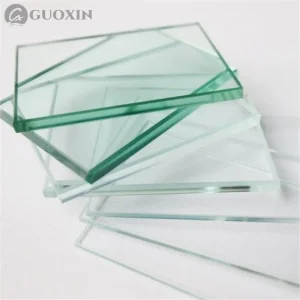
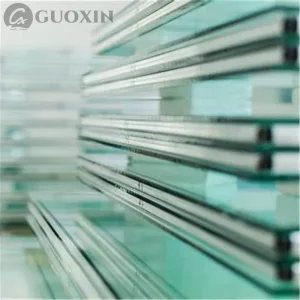
Tempered glass—frequently designated as toughened glass—is an engineered safety material fabricated through tightly regulated thermal or chemical treatments. By heating high-grade float glass to approximately 620°C (1,148°F) and immediately subjecting its surfaces to high-pressure, localized cooling jets (a process known as rapid quenching), we induce permanent compressive stresses on the outer surfaces while retaining tensile stress in the core.

This thermal tension profile yields exceptional structural advantages. When impacted, the stored mechanical energy forces the glass to fracture into small, relatively harmless, rounded fragments instead of jagged shards, drastically mitigating risks of severe laceration. For B2B procurement managers, sourcing cost-effective yet structurally compliant clear tempered glass requires balancing unit pricing with mechanical performance variables, such as surface compression values, edge polishing quality, and nickel sulfide (NiS) inclusion limits.

Performance Metrics

Standard clear glass tempered solutions exhibit up to 4 to 5 times the mechanical strength of standard annealed glass of equivalent thickness. Under standard load profiles, our tempered glass withstands wind loads exceeding 95 MPa of surface pressure, ensuring resilience in extreme architectural environments.

Global Commercial & Industrial Status

Architectural Upgrades

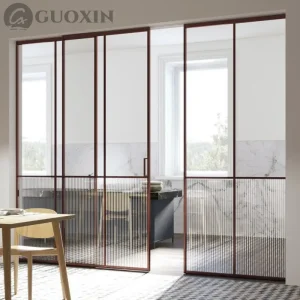
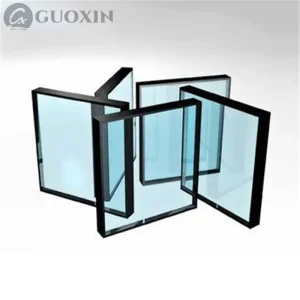
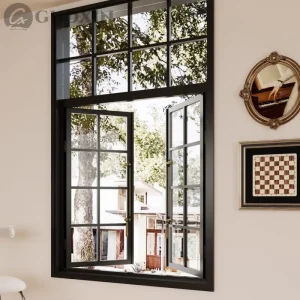
Global building codes increasingly mandate safety glazing in high-traffic zones, interior partitions, low-level windows, and dynamic structural facades. Modern energy codes also incentivize structural configurations utilizing double and triple-pane insulated units (IGUs) incorporating tempered glass layers.

B2B Supply Optimizations

Commercial stakeholders face complex logistics when balancing localized manufacturing with imports. Strategic Chinese partners specialize in high-efficiency, multi-million square meter annual outputs that provide significant cost advantages, even when factoring in trans-oceanic logistics.

Industrial Clean Room Applications

Clear tempered glass is utilized within specialized equipment housings, manufacturing viewing chambers, high-pressure sight glasses, and solar arrays. Its resilience against thermal variance of up to 250°C makes it a crucial standard material across processing industries.

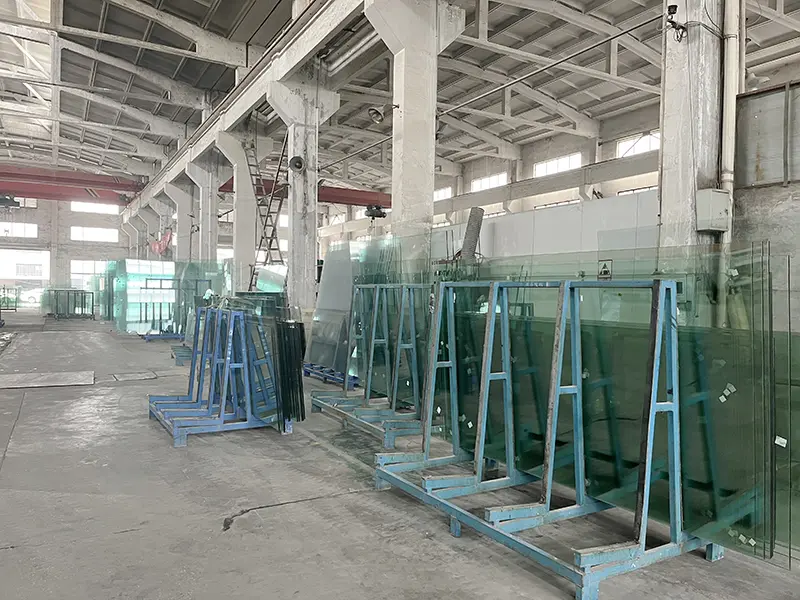
Jiangsu Guoxin Glass Co., Ltd. Production Line

Chinese Manufacturing & Supply Chain Efficiency

China's dominance in structural glass fabrication is underpinned by deep supply-chain vertical integration. At Jiangsu Guoxin Glass Co., Ltd. (founded in 2006 with a two-decade track record in high-end glass research, development, and marketing), our state-of-the-art facility integrates raw material sourcing, precision mechanical cutting, computer numerical control (CNC) edge grinding, double-direction forced convection tempering, and automated quality verification.

This level of manufacturing automation lowers raw energy costs per square meter and minimizes scrap rates compared to western competitors. Consequently, we provide high-performance clear tempered glass at highly competitive factory-direct prices without sacrificing engineering tolerances or structural safety standards.

2006 Year Founded
20+ Years Experience
100% SGCC & CE Certified
80+ Countries Exported

Technical Specifications & Custom Capabilities

Guoxin Glass provides tailored parameters to align with global building codes. Review our capability matrix below to configure your custom orders:

Property Parameter Standard Clear Tempered Glass Value High-Performance Low-Iron / Ultra-Clear Option
Thickness Versatility 3mm, 4mm, 5mm, 6mm, 8mm, 10mm, 12mm, 15mm, 19mm Custom laminate combinations up to 80mm structural systems
Visible Light Transmittance (VLT) Approx. 88% (at 6mm thickness) > 91% (for ultra-high clarity curtain walls)
Surface Compression Rating > 90 MPa (exceeds ASTM C1048 criteria) Up to 120 MPa for specialized blast-resistant specs
Edge Profiles Finished Flat polished edge, Pencil edge, Beveled edge, Chamfered CNC complex shape double-edging
Tolerance Variance ± 0.2mm (under strict ISO 9001 protocols) Custom architectural tolerances matching high-end specs
Thermal Shock Resilience Resists differentials up to 220°C (428°F) Up to 250°C matching specialized industrial glass standards

Localized Structural & Architectural Applications

Commercial Storefronts & Curtan Walls

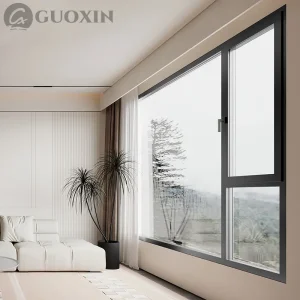
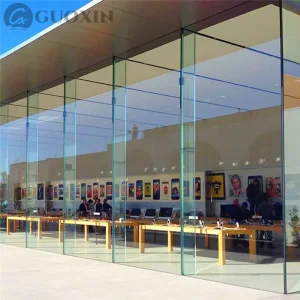
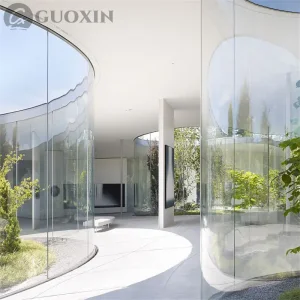
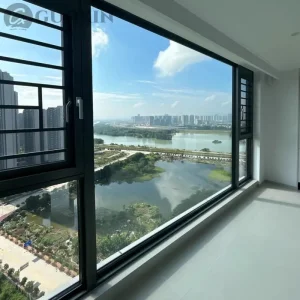
For modern retail configurations, high VLT clear tempered glass provides excellent thermal stability, high load-bearing capacity, and clear optical characteristics. This enables clean, open architectural designs that optimize natural daylight and maximize product visibility.

Balustrades, Ramps, & Structural Railings

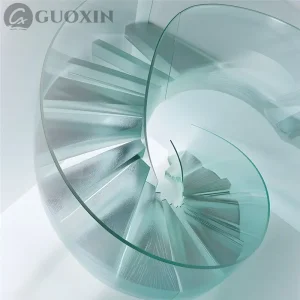
Laminated and monolithic clear tempered glass systems serve as robust, code-compliant fall-prevention barriers on stairwells, high balconies, and pedestrian ramps. This maintains safety envelopes while preserving sightlines and spatial connectivity.

Frameless Shower Enclosures & Partitions

Water-repellent coated, tempered security glass options prevent scale accumulation and survive mechanical shock in high-traffic commercial washrooms, luxury hotel bathrooms, and modern residential developments.

Global Business Layout & Supply Reliability

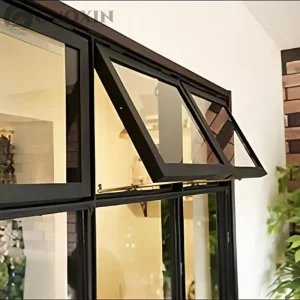
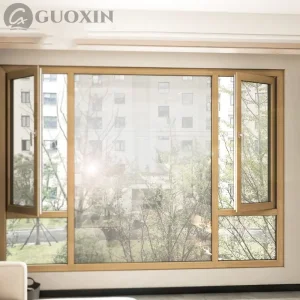
With 20 years of production and operation experience, Jiangsu Guoxin Glass Co., Ltd. has developed efficient logistical channels spanning domestic and international markets. As a leading source manufacturer in China, we supply durable and aesthetically pleasing glass doors and windows to customers worldwide.

Whether for modern high-rises, residential projects, or commercial complexes, Guoxin provides tailored solutions designed for safe transport. Our export procedures utilize moisture-resistant interleaving paper and heavy-duty steel-banded wooden crates to minimize transit damage.

“Quality first, customer first, and credit-based” guide our operations, ensuring transparent communication, reliable lead times, and compliant customs documentation.

Guoxin Glass Global Supply Footprint Map

Future Industry Trends in Glass Processing

Smart Electrochromic Integration

Integrating clear tempered outer glass sheets with dynamic liquid-crystal or electrochromic inner layers allows users to switch from transparent to opaque configurations via automation, optimizing solar gain and privacy controls.

Ultra-Thin High-Strength Form Factors

Chemical strengthening and precision thermal tempering innovations permit the production of thin 2mm and 3mm tempered panes with high mechanical resistance. This reduces dead weight in facade profiles and sliding door frameworks.

Low-E & Solar Control Laminations

Combining clear tempered panes with magnetron-sputtered Low-E metallic coatings blocks up to 99% of UV radiation. This improves thermal insulation performance, aiding projects in meeting LEED and other green building certifications.

Global Enterprise Procurement Guidelines

Mitigate cross-border risks, prevent structural product failure, and guarantee compliant building code execution by applying our recommended B2B procurement checklist:

1. Certifications & Traceability

Verify your supplier provides authentic test certifications (e.g., ANSI Z97.1, CE EN 12150, AS/NZS 2208). Each shipped sheet should feature a permanent laser-etched bug logo with the appropriate standard license and manufacturing number.

2. Quality Control & Testing Protocols

Inquire about in-factory testing capacities, specifically Heat Soak Testing (HST) conforming to EN 14179. This process subjects tempered panes to sustained heat, initiating the expansion and failure of latent nickel sulfide (NiS) inclusions before shipping.

3. Raw Glass Sourcing Quality

Ensure the supplier processes high-quality raw float glass with low levels of bubbles, stones, or internal stresses. Float glass suppliers like CSG, Xinyi, or Jinjing provide stable bases for precision tempering, resulting in low self-explosion rates.

Frequently Asked Questions (FAQ)

Q1: How do you offer "cheap" clear tempered glass without compromising quality?
Our cost efficiency comes from scale, automated double-direction convection furnaces, and vertical supply-chain integration. By locating our operations in Jiangsu's industrial glass cluster, we secure competitive rates on raw float glass and raw energy. Automation reduces manual labor costs and lowers scrap rates, allowing us to pass savings directly to international buyers.
Q2: What is the spontaneous breakage rate of your clear tempered glass?
Our standard self-explosion rate is under 0.3% due to high-grade raw materials. For critical projects, we provide Heat Soak Testing (HST) in accordance with EN 14179, reducing the potential risk of spontaneous breakage to less than 1 in 10,000 square meters.
Q3: Can tempered glass be cut or drilled after the tempering process?
No. Tempered glass cannot undergo mechanical modification once tempered. Cutting, drilling, or edge grinding after thermal treatment releases internal compressive stresses, causing the pane to fracture. All dimensional specifications, hole locations, and edge treatments must be fabricated and verified prior to the tempering process.
Q4: What certifications does Jiangsu Guoxin Glass Co., Ltd. hold?
Our products meet international architectural safety codes, holding SGCC (ANSI Z97.1) certification for the US market, CE (EN 12150) certification for Europe, CCC (China Compulsory Certificate), and AS/NZS 2208 for Australia and New Zealand.
Q5: What is the typical lead time for a container order?
Standard production lead time ranges from 15 to 25 days following order confirmation and drawing approval. Shipping durations depend on the destination port, typically taking 14 days to West Coast North American ports and 30-35 days to European base ports.
Q6: What packaging configurations are used to prevent breakage in transit?
We use robust, export-grade plywood crates with protective paper or powder interleaving. The crates are secured with high-tensile steel straps inside the container, utilizing specialized bracing to prevent shifting during transit.
Q7: Can you manufacture custom shapes, holes, and polished edges?
Yes, our CNC processing center accommodates complex shapes, internal cutouts, hinge preparation, countersunk holes, and custom edge polishes (flat, pencil, beveled, and Ogee) based on CAD drawings.
Q8: How does low-iron glass differ from standard clear glass?
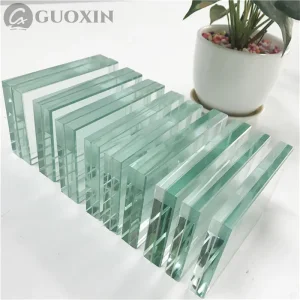
Standard clear glass contains higher iron oxide levels, yielding a slight greenish tint that becomes more pronounced in thicker panels. Low-iron glass features a reduced iron content, providing high clarity, minimal distortion, and up to 91% visible light transmission.