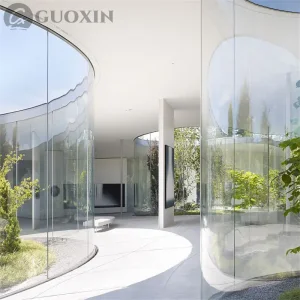
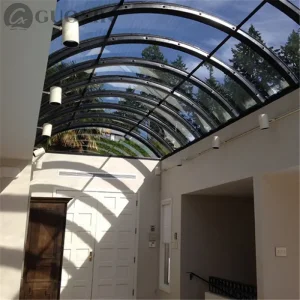
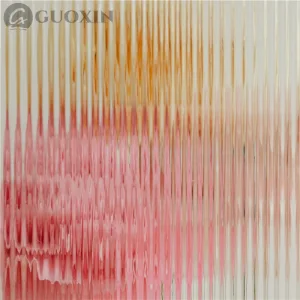
Explore our premium range of architectural windows, custom-engineered insulated glass units, and safety glass systems manufactured to global standards.
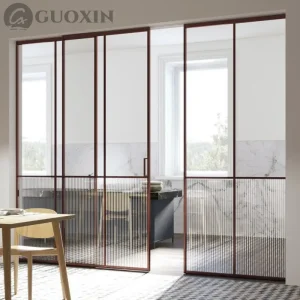
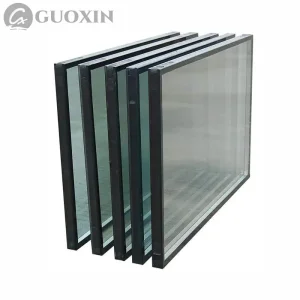
An in-depth analysis of polymer interlayer chemistries, adhesion criteria, and performance parameters for architects, structural engineers, and global procurement departments.
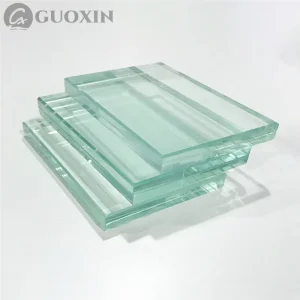
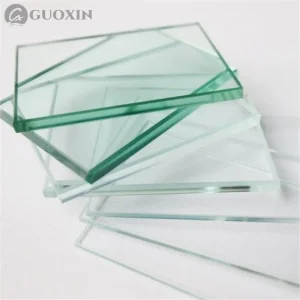
Modern architectural glazing relies heavily on the mechanical, acoustic, and thermal characteristics of the polymer interlayers used during autoclave lamination. Laminated glass film, commonly engineered from Polyvinyl Butyral (PVB), Ethylene Vinyl Acetate (EVA), or SentryGlas Ionoplast (SGP), serves as the viscoelastic core that maintains structural load path coherence upon glass rupture.
As a leading OEM Laminated Glass Film Manufacturer, we synthesize polymers that control shear modulus, adhesion values (pummel ratings 3 to 7), and light transmittance. The molecular structure of our interlayers is customized to absorb dynamic energy under impact loads, dispersing shock waves and securing safety barrier compliance under global codes.
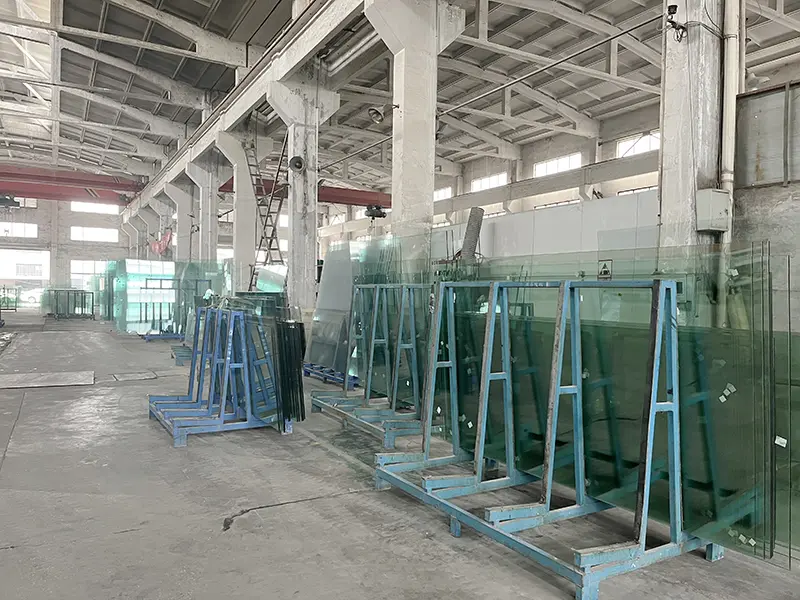

International procurement managers prioritize edge stability, haze minimization, and acoustic decoupling performance. The paradigm has shifted from basic safety barriers to multi-functional smart glazing systems, incorporating solar-control layers and electrochromic PDLC liquid crystal interlayers directly into the laminated pane configuration.
Decarbonization frameworks demand structural glazing that decreases cooling loads. Advanced PVB co-extrusions now optimize the Solar Heat Gain Coefficient (SHGC) down to 0.35 when paired with Low-E glass coatings, dramatically reducing building energy consumption. Additionally, global architectural trends demand larger span sizes (jumbo size format sheets up to 3.3m x 6m), requiring raw films to exhibit superior dimensional tolerance and high zero-shear viscosity to prevent polymer crawl during heating.
Jiangsu Guoxin Glass Co., Ltd. bridges the gap between state-of-the-art materials engineering and commercial-scale manufacturing.
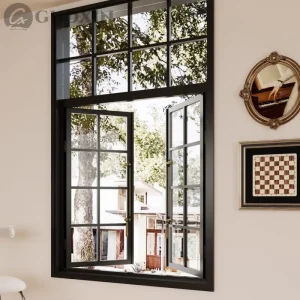
Founded in 2006, Jiangsu Guoxin Glass Co., Ltd. has established an industry-leading position in the glass processing and architectural supply sectors over the course of two decades. Our company has built an extensive portfolio in the research, development, custom manufacturing, and global distribution of thermal-efficient aluminum windows, fireproof barrier glass, structural laminated glass, and low-E insulated glass units. This technical background empowers us to supply tailored, high-durability products aligned with international engineering specifications.
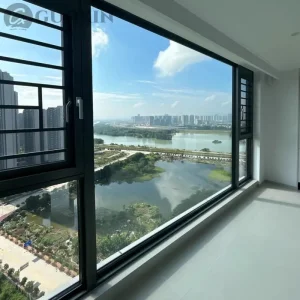
Composed of experienced material scientists, chemical processing specialists, and structural design engineers, our team focuses on developing architectural glass structures with optimized safety margins. Our laminated and insulated products are engineered for superior mechanical strength, acoustic isolation, and energy savings, finding application in complex commercial facade installations, heavy-traffic infrastructure, and soundproof window systems.
Since our inception, our operations have adhered to the management guidelines of "quality first, customer first, and credit-based." From raw material selection to pressure chamber processing, every step is traceably documented. Through partnership with global logistics hubs, we provide reliable technical services, customized configurations, and localized compliance support to glass laminators and engineering firms worldwide.
Deploying polymer interlayers across diverse structural, safety, and acoustic application environments.
For point-supported structural facades and canopy glazing, we recommend SGP (Ionoplast) interlayers. They offer 100 times the stiffness and 5 times the tear strength of traditional PVB, ensuring structural load-bearing capacity even after glass fracturing.
Our acoustic-grade co-extruded PVB features a sound-absorbing core that targets the coincidence frequency dip (1000 Hz to 4000 Hz). It reduces sound transmission index (Rw) by up to 3-5 dB compared to monolithic glass layouts.
Infrared reflective (IR) PVB films integrate nanotechnology particles to block heat-generating IR wavelengths while preserving visible light transmittance (VLT > 70%), reducing HVAC cooling demands in commercial glass towers.
Innovative interlayer technologies focusing on functional smart integration, organic polymers, and circular economy compliance.
The laminated glass film industry is moving toward active glazing integrations and environmental sustainability. Our R&D division focuses on three primary technology areas:
Developing high-crosslinking density EVA and POE (Polyolefin Elastomer) films designed for long-term outdoor durability in building-integrated photovoltaics. These films offer PID (Potential Induced Degradation) resistance and low moisture ingress rates.
Transitioning to bio-derived plasticizers and post-consumer recycled PVB resin matrix systems. This reduces the carbon footprint of interlayer manufacturing while maintaining identical optical purity and mechanical shear values.
Developing polymer layers that respond to ambient temperature changes, shifting from transparent to opaque white when exposed to high solar heat to block thermal transmission without electrical input.
Deep engineering insight into the application, lamination mechanics, and troubleshooting of polymer glass films.
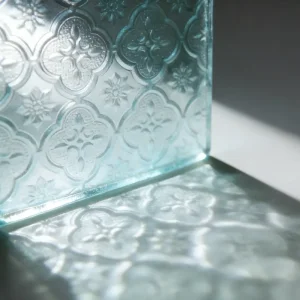
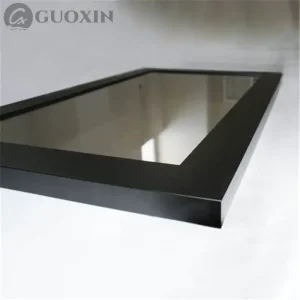
Browse our selection of safety glass panels, decorative patterns, curved profiles, and energy-efficient window systems.
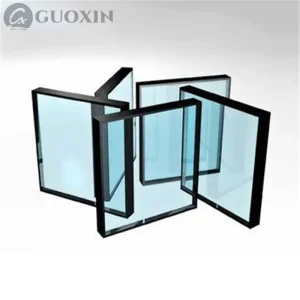
Discuss your structural glazing specifications, custom interlayer parameters, and volume procurement requirements with our R&D engineering division.
Talk to Guoxin Guoxin Glass